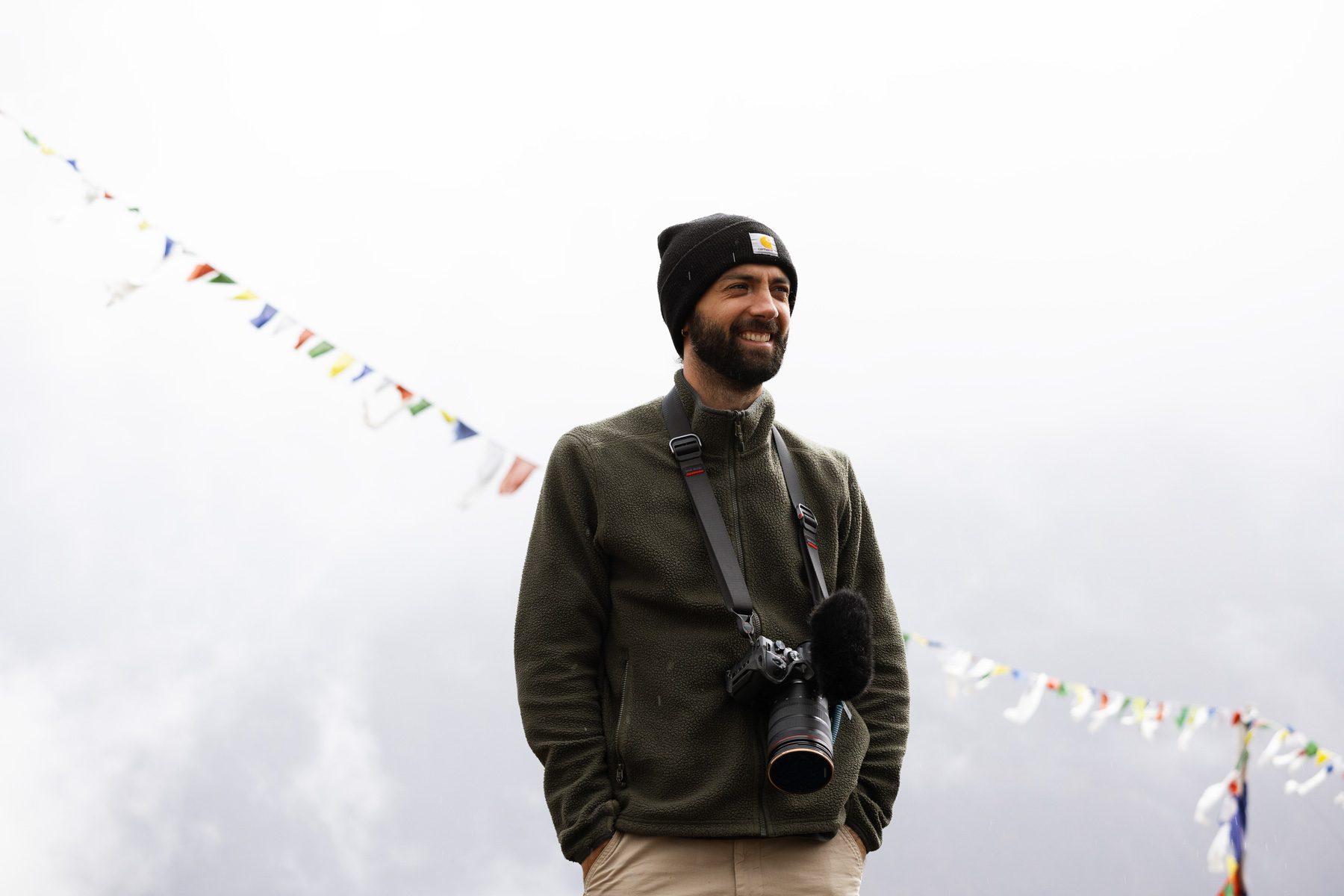
 By Thomas Cytrynowicz
A winter expedition at -30° can sound daunting if you have never tried one. I understand that. But after a winter on the steppe, I can tell you that once you have the right gear, the cold stops being an obstacle and becomes part of the landscape.
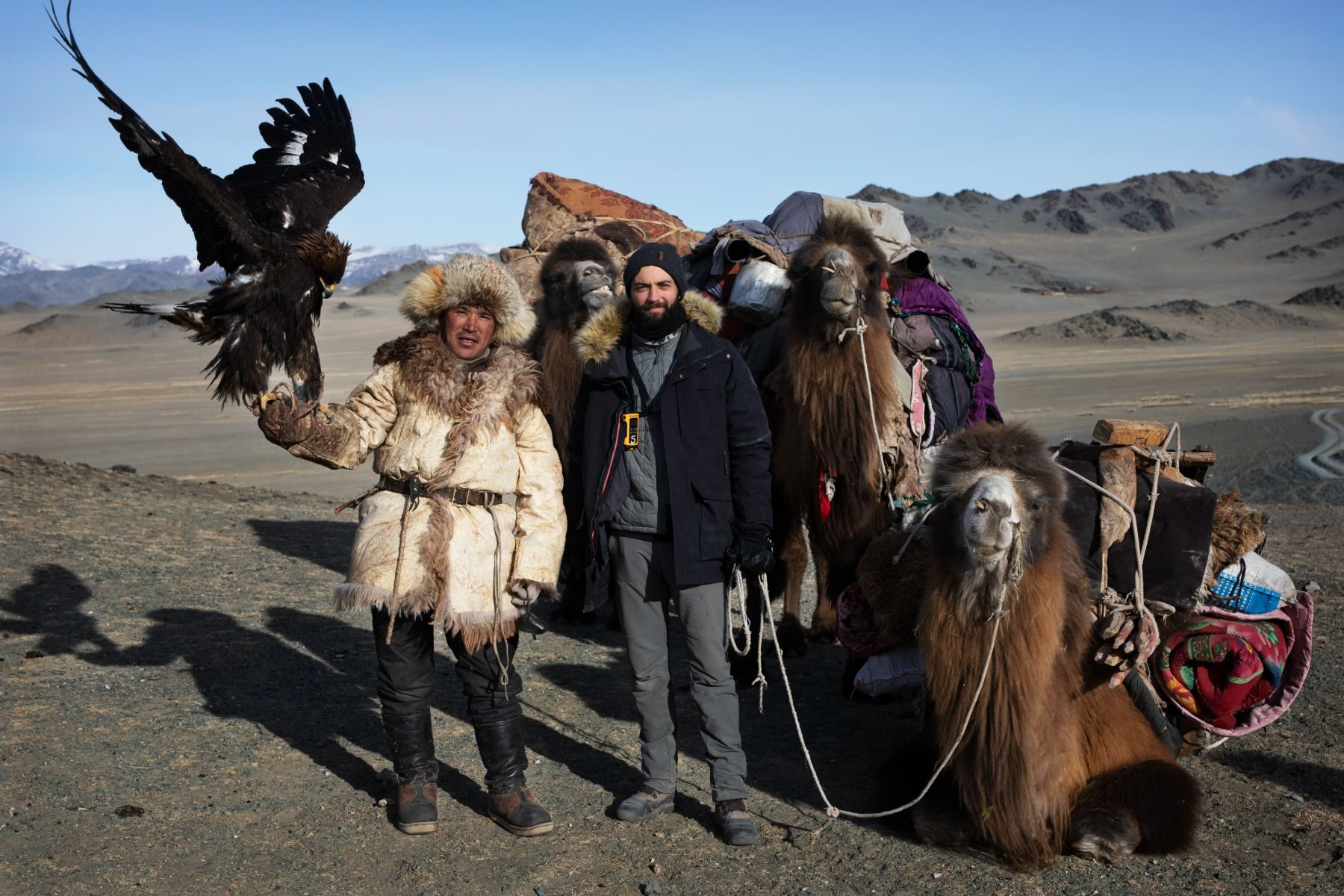
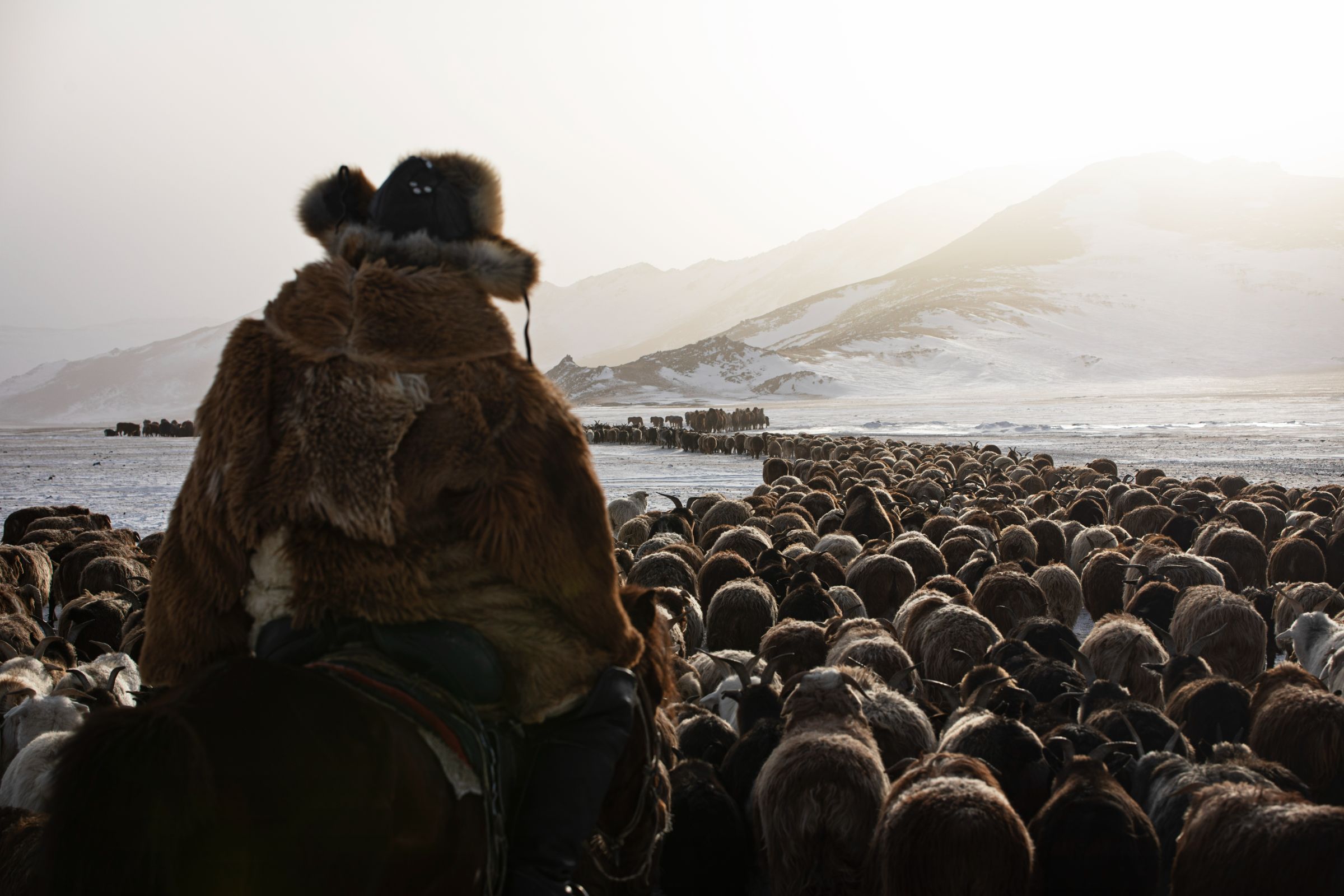
Thomas & Shokhan on the first day of the winter migration
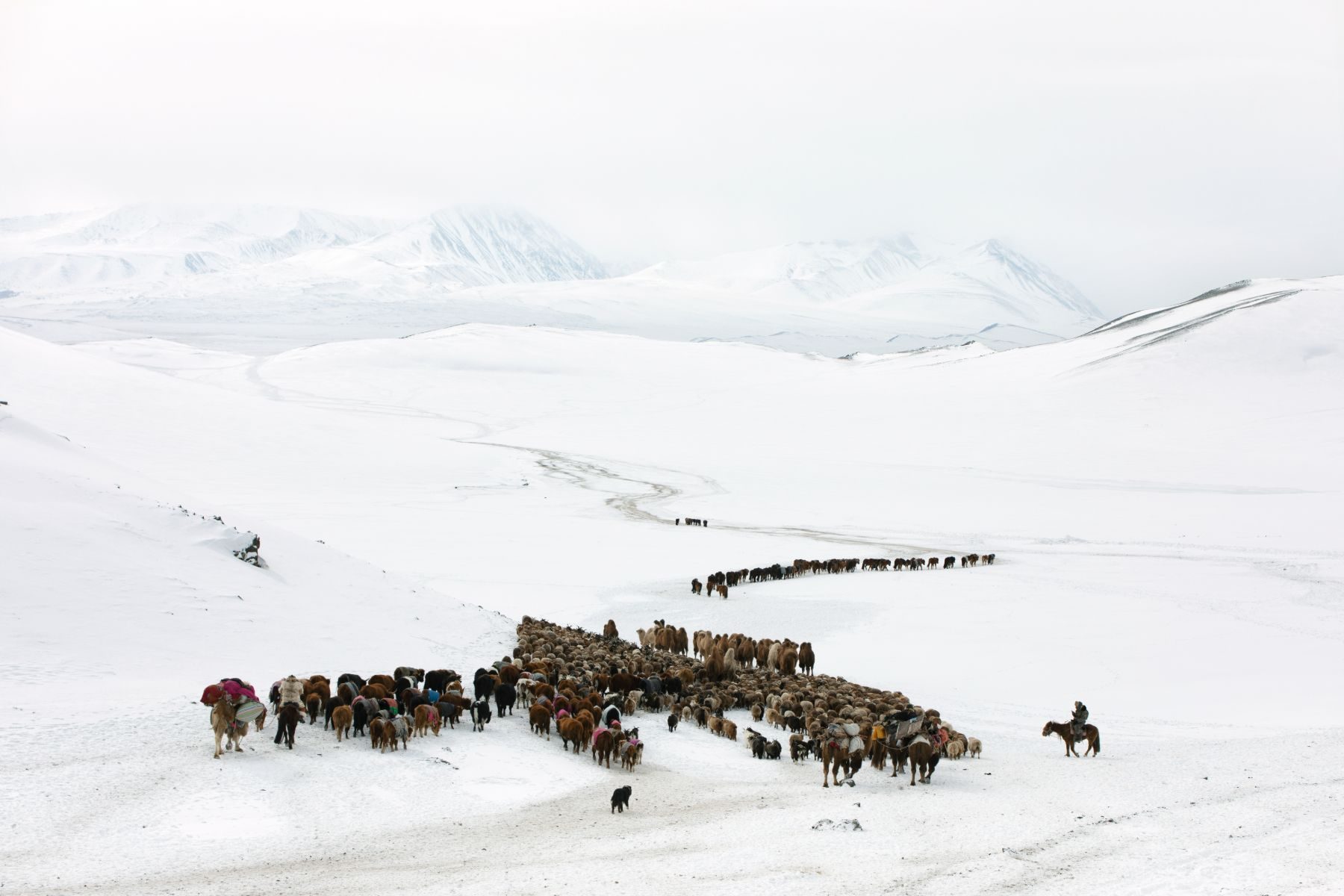
Every migration has something mesmerizing about it. You move at the speed of the animals, through a landscape so vast it seems to have no edges. Your mind slows down to match your steps. It is a meditative way of walking, even when the days feel long.
For five days, we walk with the herd. That’s about 25 km a day, or around six hours on foot.
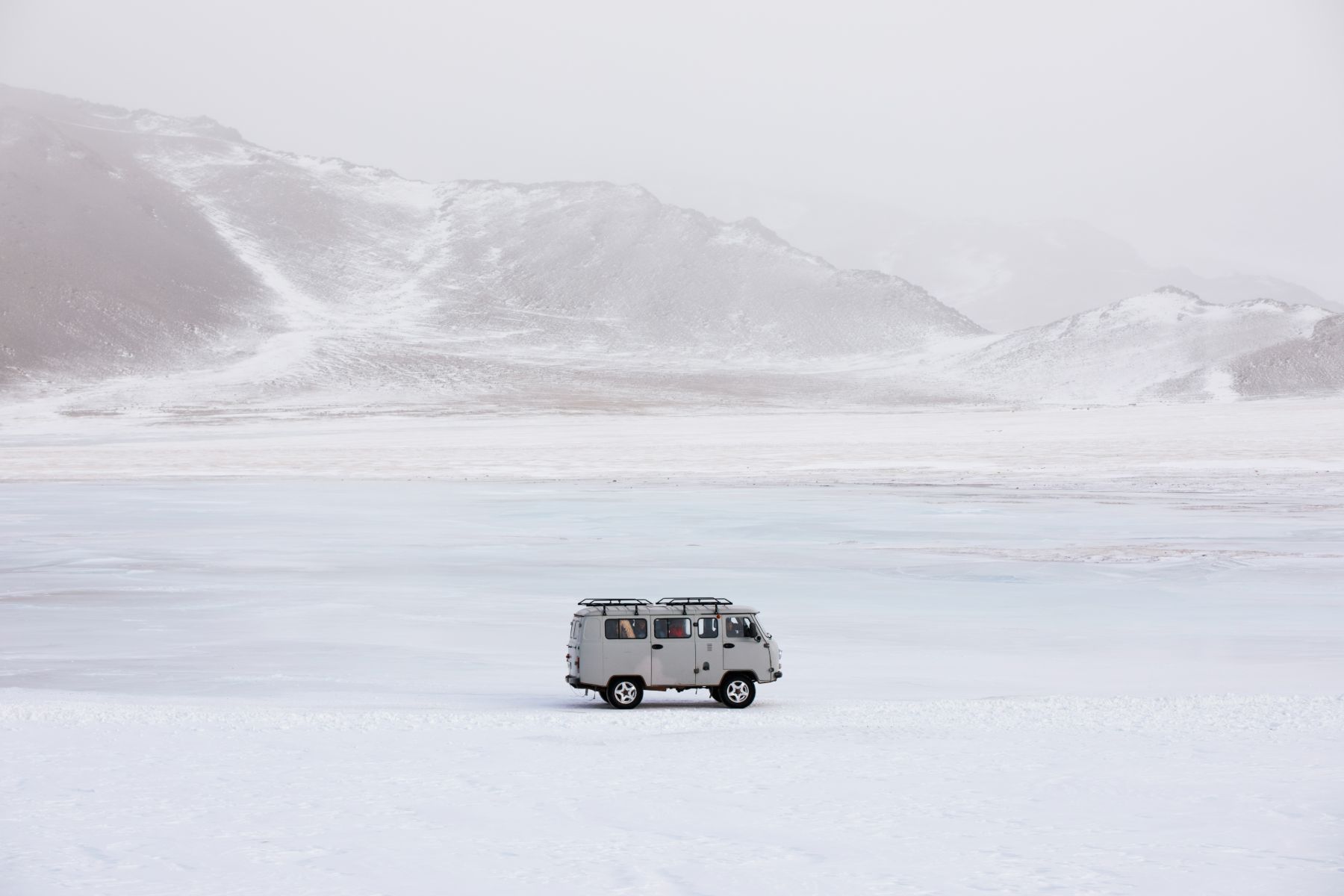
Fear not, our cars follow us the whole way. You can rest whenever you need to, or ask a driver to take you ahead of the herd and catch the procession from a new angle.
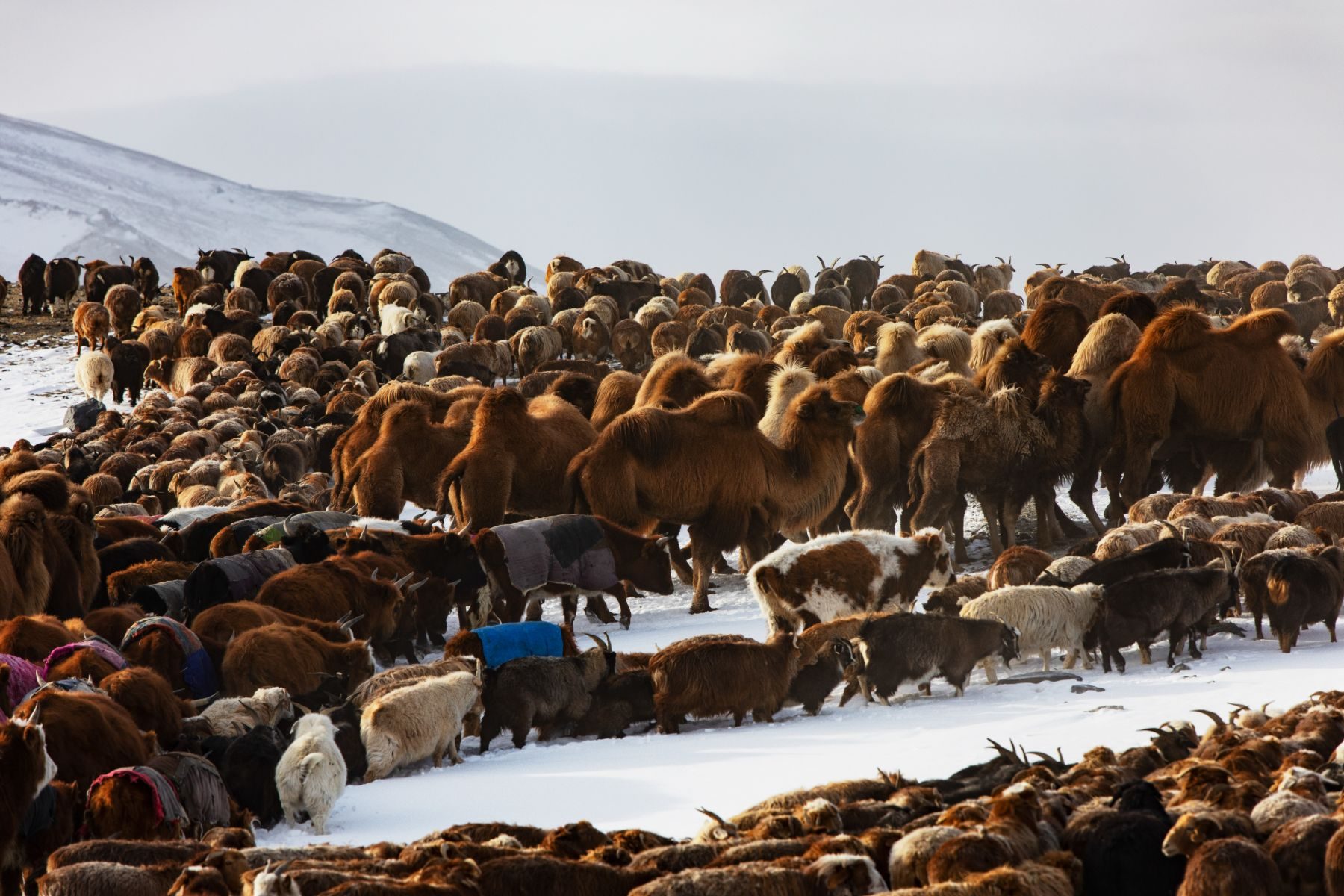
Shokhan’s herd on the move
A different kind of achievement
There is finishing a marathon, a trail or a hard climb. And then there is walking a full migration, sharing for a few days the need to keep moving that lets families and their animals survive the steppe.
Years after my first migration, I still carry it with me. I remember the strange sense of disconnection that set in on the second morning, as if the rest of the world had quietly drifted away. And I remember the joy of seeing our destination at last, far across the final plain.
Effort like this brings people together. We arrive as strangers and leave as a close group who shared something that rarely happens twice.
There is no bad weather, only bad equipment.
Protecting your camera gear
The cold itself is rarely a problem for your camera. What you really need to watch is the move between inside and outside.
When you step into the ger, the sudden change in temperature and humidity will almost certainly fog up your lens for a while. That’s normal. The danger comes if you take the camera back outside before the fog has fully cleared: the moisture freezes instantly and can damage your lens, or worse, your sensor.
The rule is simple. Going from outside to inside is no problem. Going from inside to outside, wait until every trace of fog has gone.
A good habit is to slip your camera into a large zip-lock bag, sealed while you’re still outside, before you go indoors. The condensation then forms on the bag, not on your gear, and you can let it warm up slowly while you enjoy your cup of hot milk tea.
Batteries are the other thing to think about. The cold drains them much faster than usual, so keep your spares in an inside pocket, close to your body. Warm batteries last far longer, and you won’t miss the shot when the light finally turns golden.
A dry cold
Winters in Western Mongolia are very cold, but mostly very dry. There is no humidity to seep into your clothes and settle in your bones. Dress in the right layers and you will feel surprisingly warm.
It’s indeed all about layering, from the skin out. This is my advice on what to pack.
- A thermal long-sleeve base layer
- A merino wool layer
- A fleece
- A down jacket
- A winter expedition jacket as the outer shell
- Winter hiking boots, since you’ll be on your feet for about six hours a day if you walk the full migration
- Layered gloves. My favourites are from The Heat Company, designed to keep your hands warm while still letting you work your camera (not an affiliate link)
The small pleasures
From this journey, what stays with me most are the simple moments. The stove crackling in the early morning, when the cold is at its sharpest. Getting up anyway, dressing up fast to beat the cold, so as not to miss the dawn. Walking all day in that endless beauty. A cup of hot, sweet tea at every break. And at nightfall, stepping into a ger that’s already warm, pulling off our boots and raising a small glass of smooth Mongolian vodka.
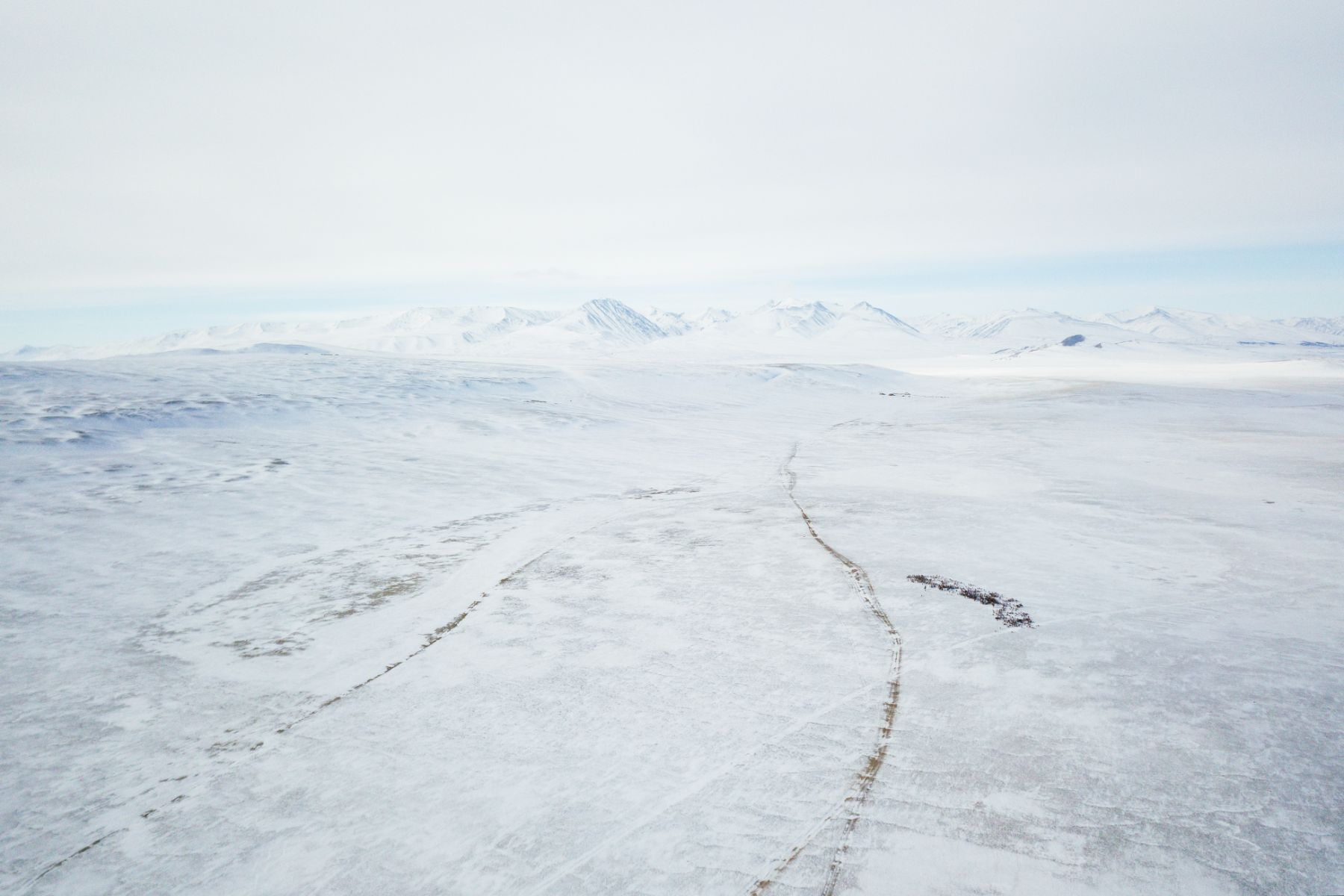
The herd crossing a vast plain