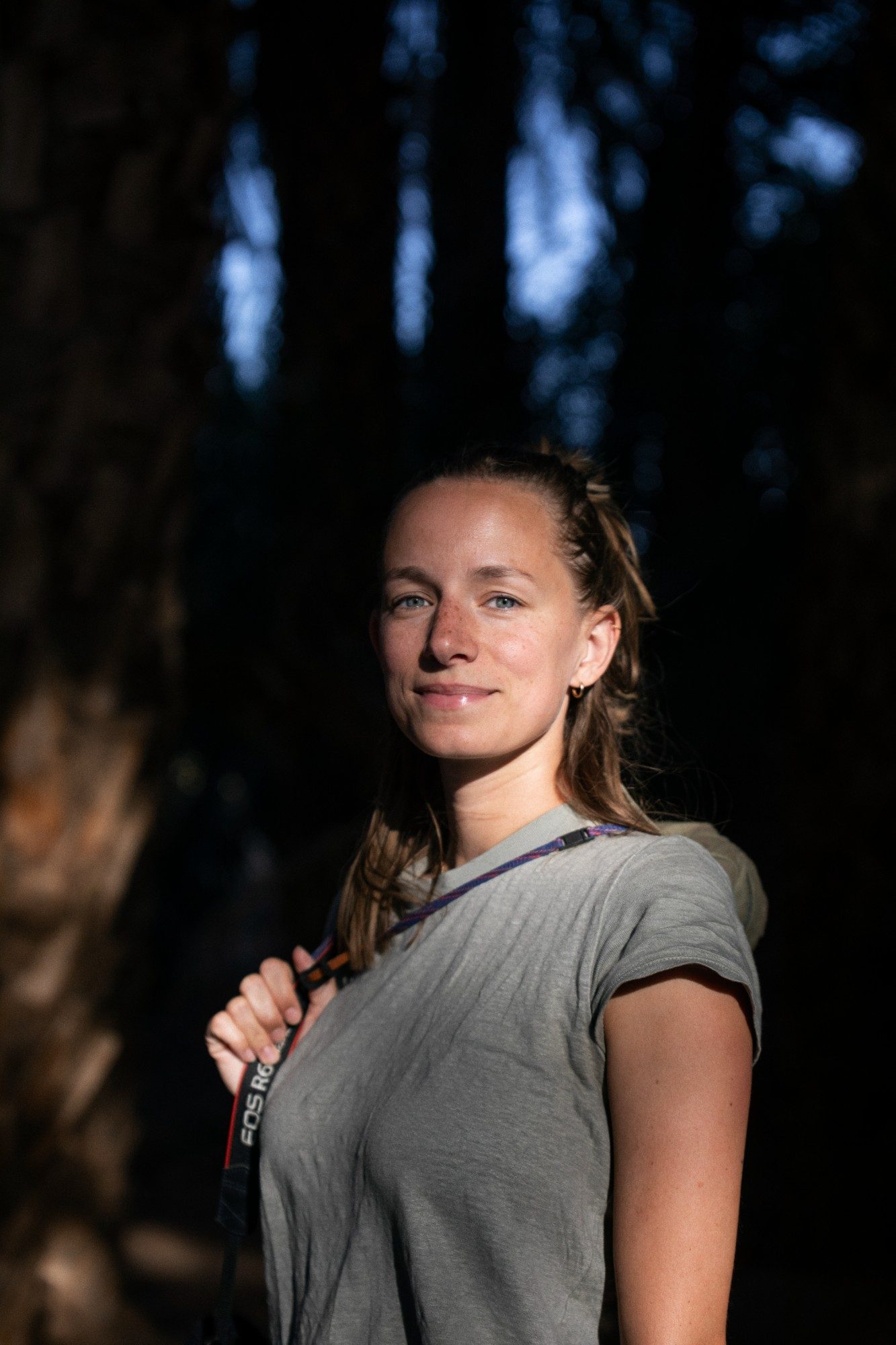
 By Emilie Tricot
If someone had told us a few months ago that we would be filming behind the scenes of Mongolia's biggest event, we honestly wouldn't have believed it.
But life keeps proving the same simple truth to us: the best opportunities come when you open yourself up to the unknown.
This summer, we had come to Mongolia for one thing: to film the first chapter of Transhumances with a nomadic family in the far west of the country. We certainly didn't expect to end up in the middle of a national stadium.
A coffee with Naraa
It all started when we arrived in Ulaanbaatar. Michel, a distant cousin of Thomas, encouraged us to get in touch with Naraa, a Mongolian woman deeply involved in the cultural heritage of her country, who works among others with shamans.
One message later, we were sitting together over a coffee, talking about our respective projects. The connection was immediate. We all left convinced that, one day, we would work on something together.
That day came much sooner than expected. Two weeks later, Naraa called us back. She wanted to produce a documentary on the backstage of Naadam, the greatest cultural and sporting festival in Mongolia, and more precisely on the man in charge of its opening ceremony, and asked us if we wanted to direct and film it.
Of course, we said yes straight away.
What is Naadam?
Every July, Mongolia comes to a standstill for Naadam. The name simply means "games", and Mongolians often call it the festival of the "three manly games": wrestling, horse racing and archery.
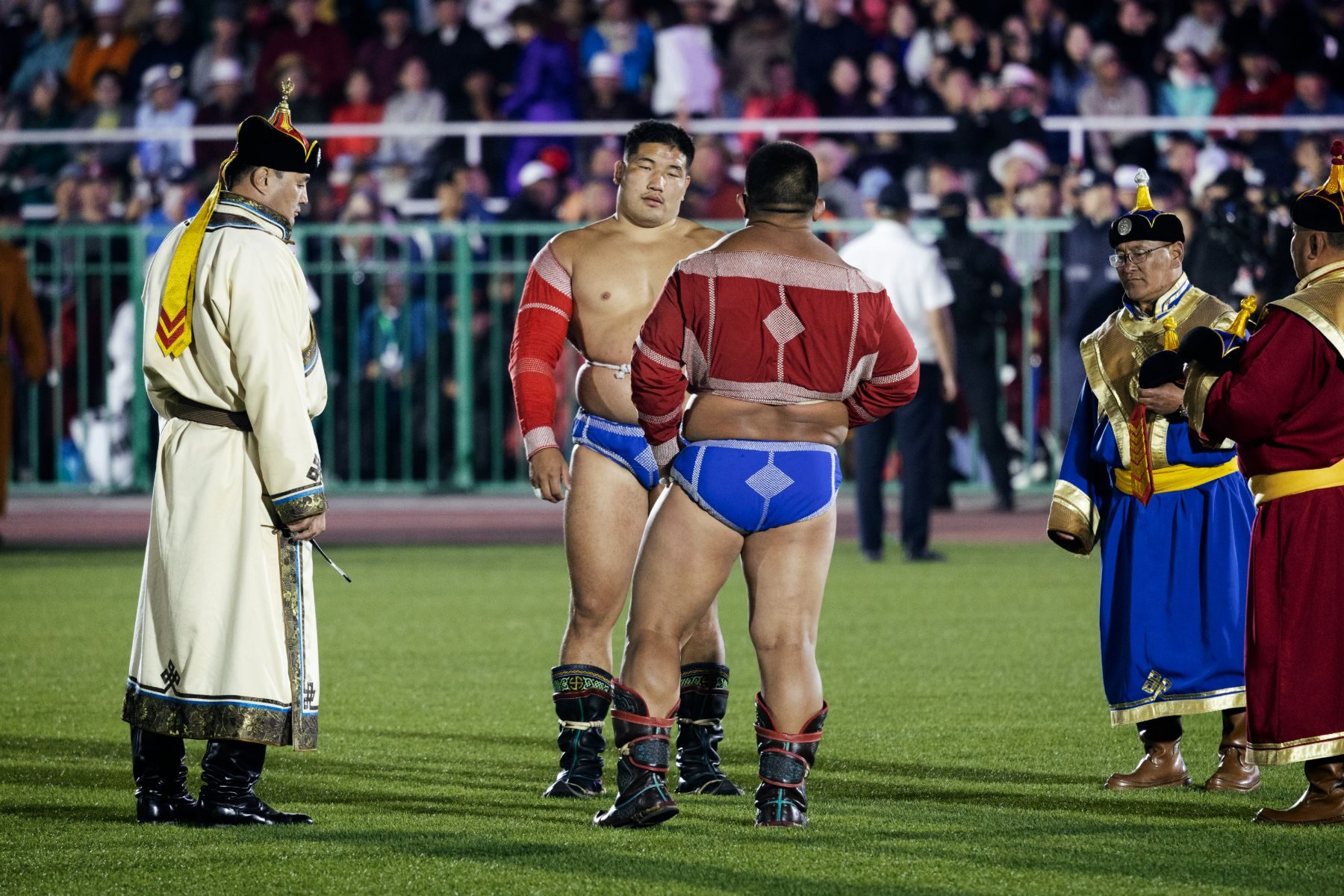
Bat-Ölzii Bayarkhüü and Bayarsaikhan Orkhonbayar face each other at the wrestling final
Its roots go back centuries, to the great gatherings of the steppe, when tribes met to celebrate, settle alliances and test the strength and skill of their best men before war or the hunt. Today, it is above all a national celebration of Mongolian identity, recognised by UNESCO as part of the intangible cultural heritage of humanity.
In every province, families gather around wrestlers, archers, and children barely older than ten who race their horses across dozens of kilometres of steppe. Women compete in archery and horse racing, while wrestling is still reserved for men.
But the heart of the festival beats in Ulaanbaatar, at the National Stadium. There, the opening ceremony brings together the whole country, from the President to families who have driven for days, in front of a show celebrating Mongolian history, music and nomadic life.
It is this ceremony that Bayra has to bring to life.
Meeting Bayra
Bayra is a renowned Mongolian dancer and singer. This year, he was chosen to orchestrate the Naadam ceremonies at the National Stadium of the capital.
Naraa had already shared the idea of the film with him. All that was left was for him to meet the two people who would follow him with their cameras.
So the three of us turned up at the National Stadium, in the middle of a rehearsal. A few words, a handshake, and his yes was confirmed. The project could officially begin.
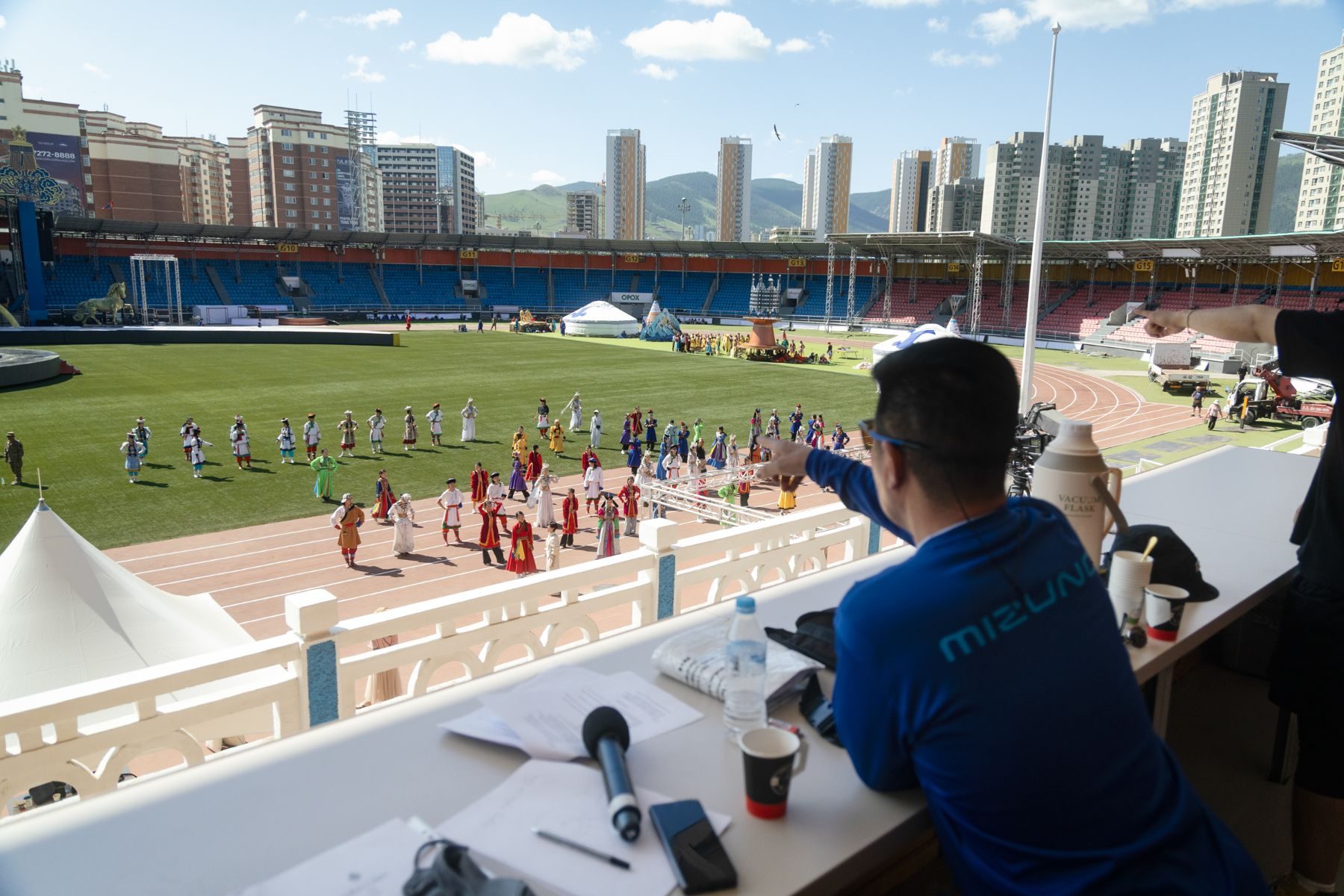
Bayra coordinating the dancers from the stadium podium
A colossal role
His role is simply colossal, and we don't use the word lightly.
He has to imagine the choreographies, think through every detail of the staging, compose the musical edits, supervise hundreds of traditional costumes, coordinate a giant set design and a drone show, and manage more than 2,000 people, including 800 dancers and around a hundred animals.
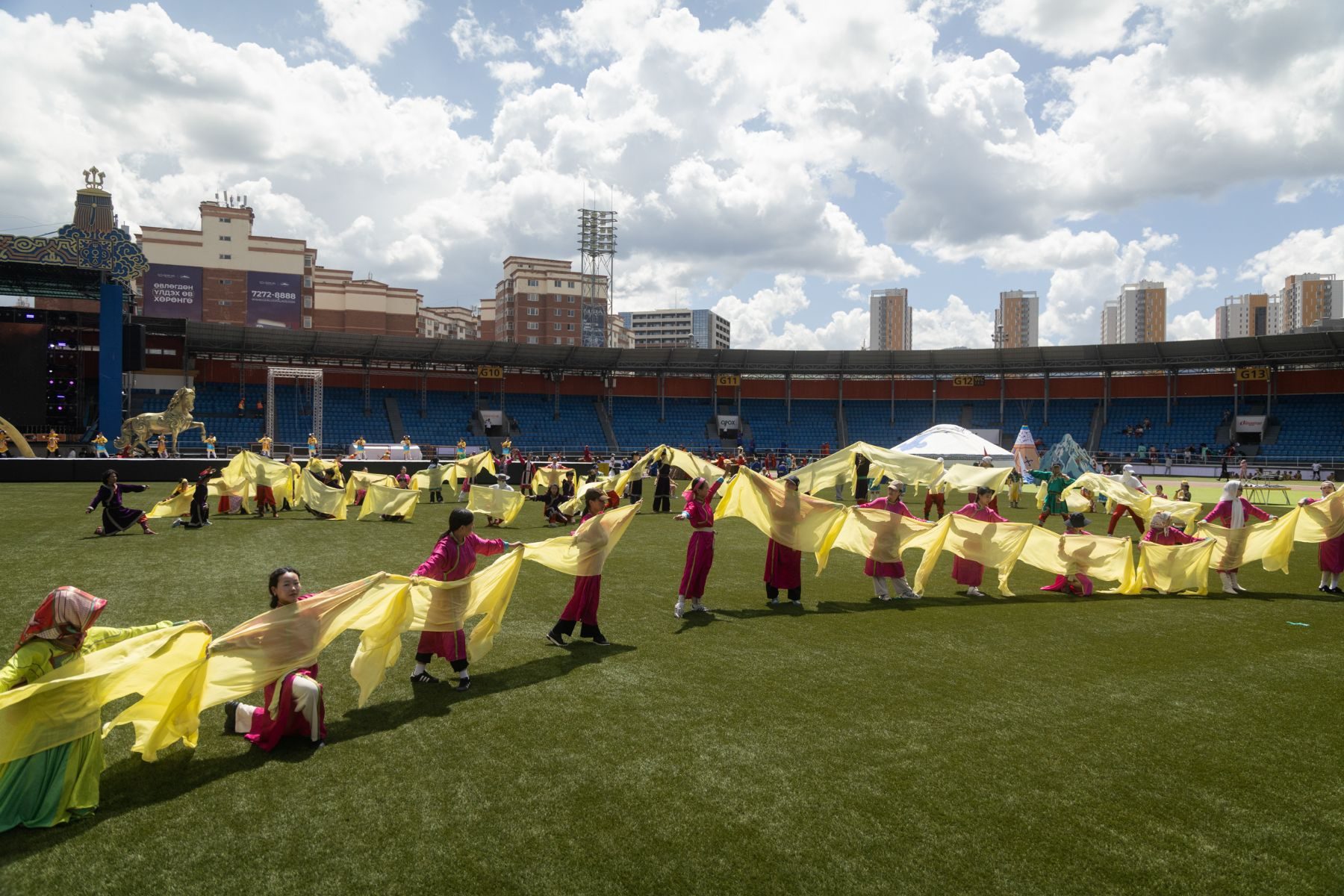
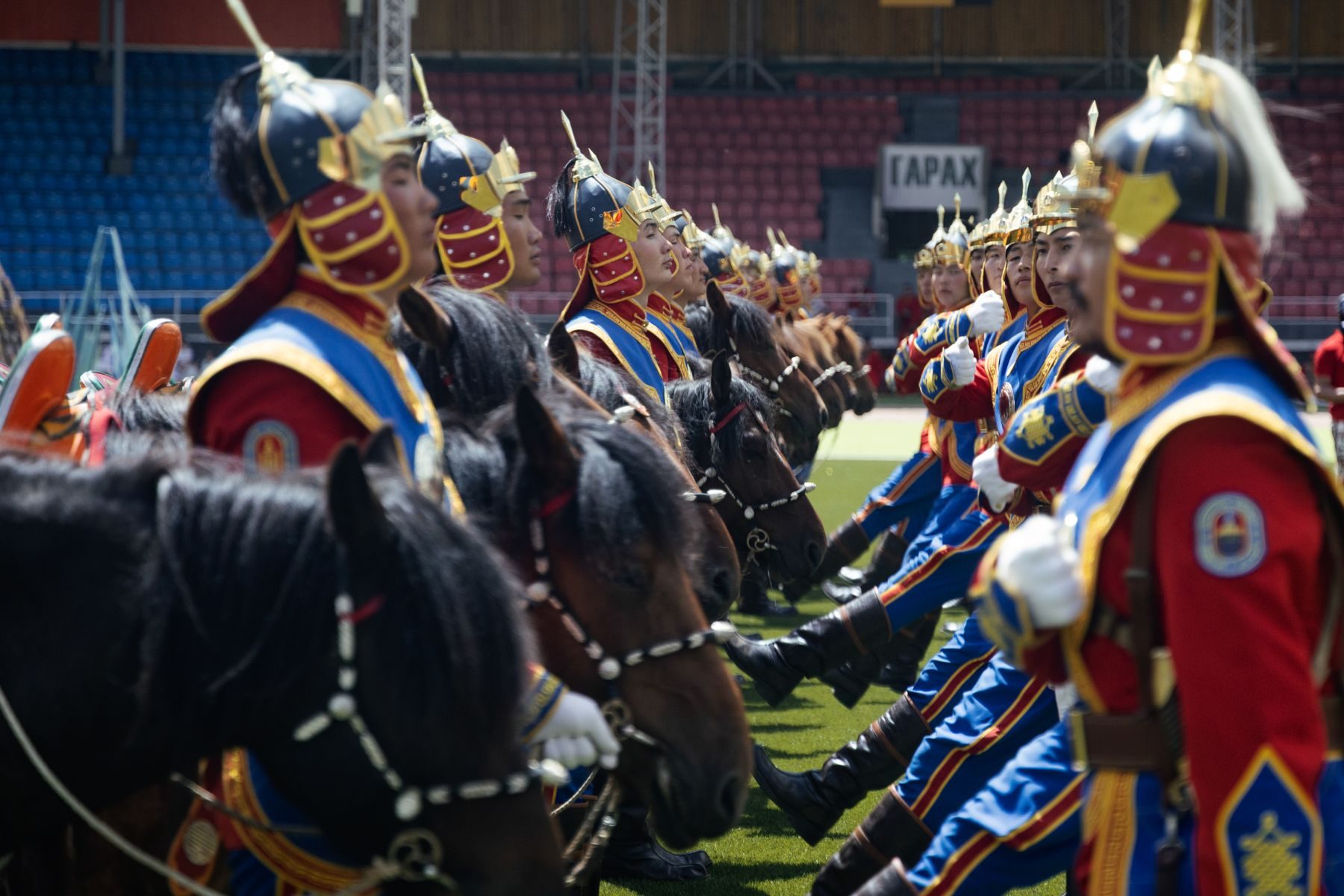
For ten days, we followed him through his moments of stress, of doubt, and of glory.
We discovered the other side of the stage: the immense political pressure resting on his shoulders, and the challenge of pleasing a Mongolian people who are deeply proud of their national festival, and therefore highly critical of it.
Orchestrating a project like this means carrying the hopes of an entire country on your shoulders.Bayra
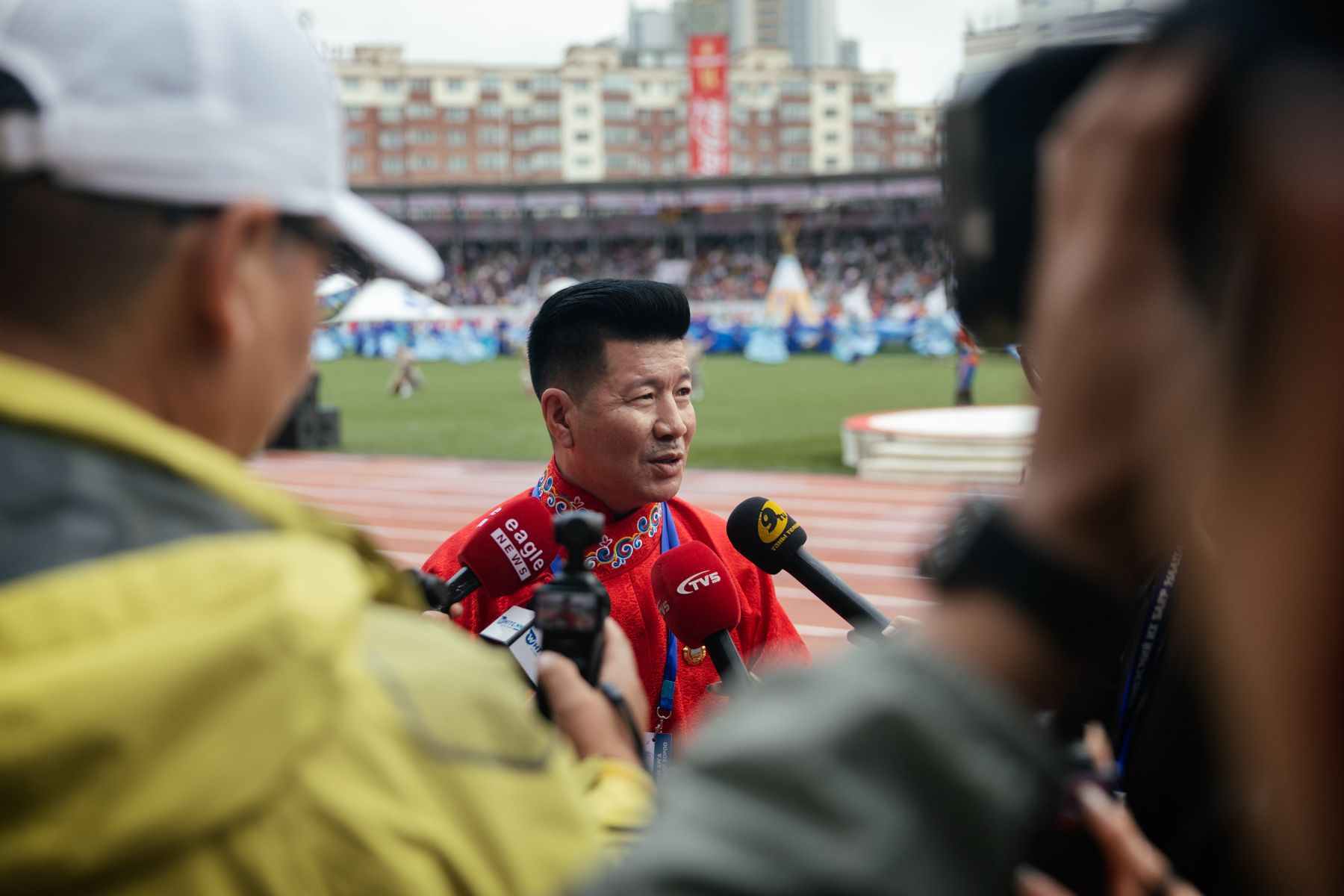
To us, Bayra is a true maestro.
But beyond the grand spectacle, it is a raw, intense human adventure that we wanted to capture. The story of proud, passionate people who make their country shine.
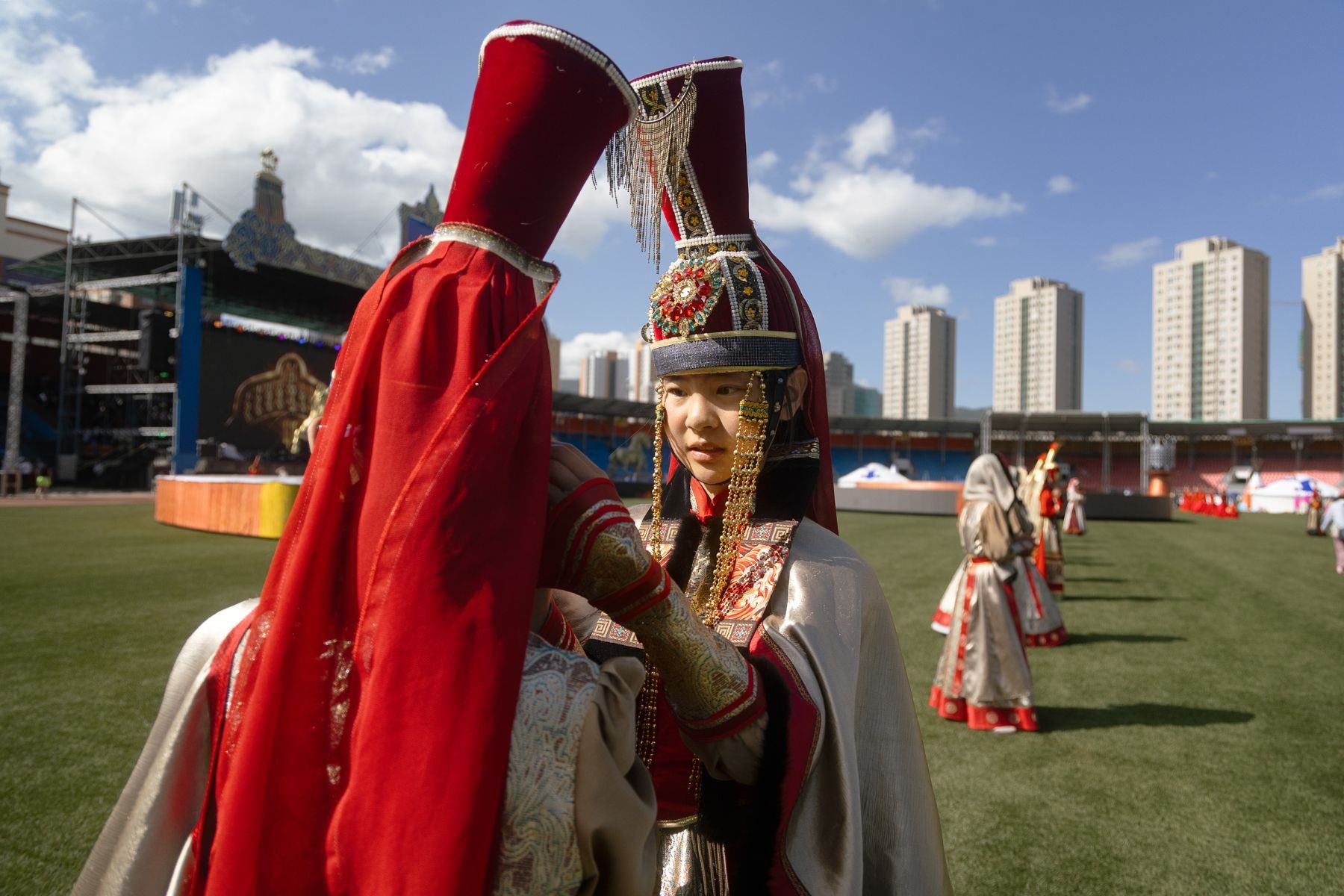
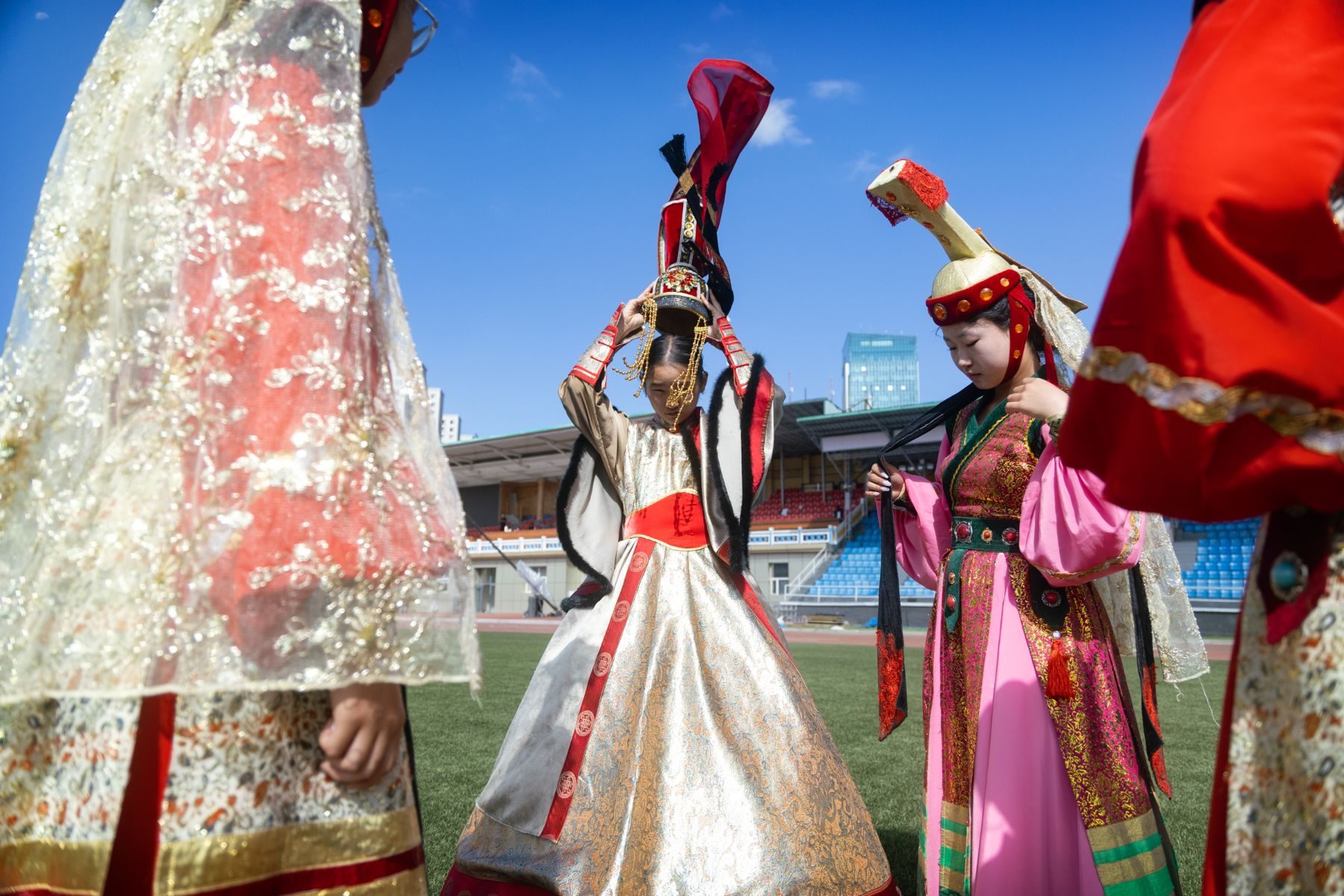
We have already shared a few images of this colourful project on our Instagram. The film is now in the editing room, and we hope to bring it to a large audience together with Naraa.
All photos: Thomas Cytrynowicz | Karai ©