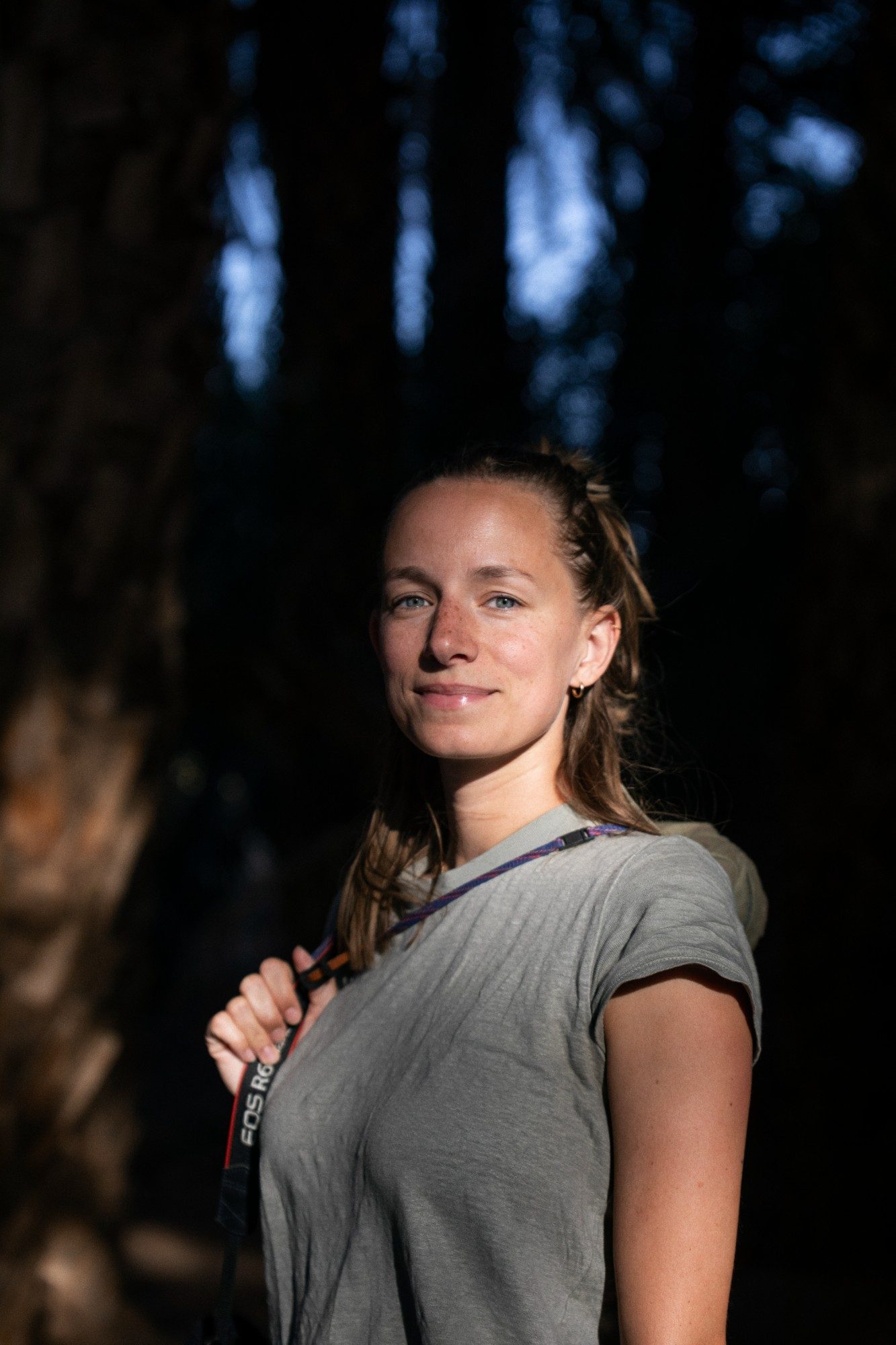
 By Emilie Tricot
Once a year, the monastery of Kungri wakes up for its Cham festival. This July, we were there with our expedition group.
But the moment we arrived, the group dissolved. Everyone drifted off into the crowd, the music and the colours, each of us living the day in our own way. This is how I lived mine.
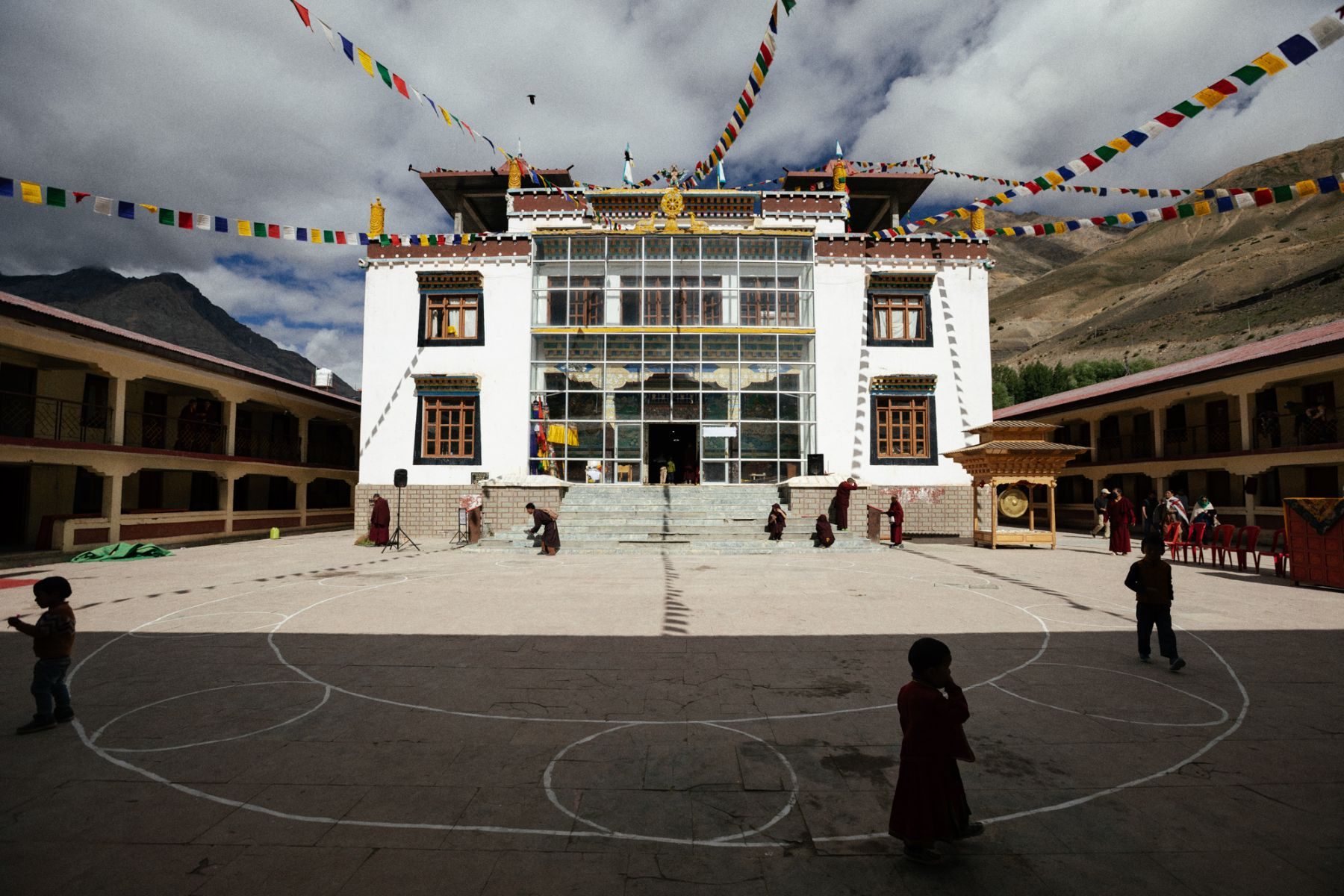
The courtyard of Kungri monastery, before the crowd arrives - Thomas Cytrynowicz ©
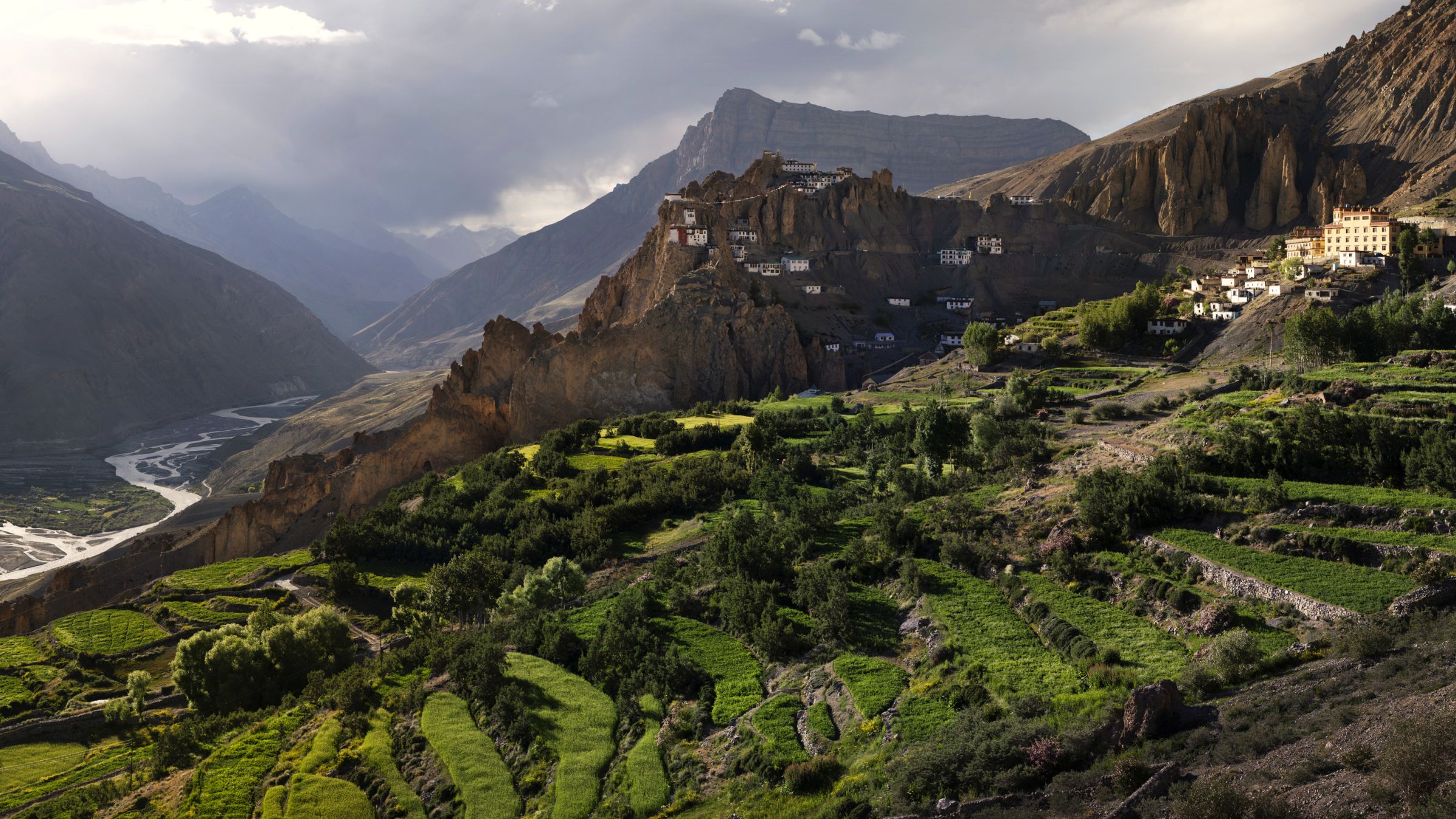
Tucked away in the Pin Valley, one of the quietest corners of Spiti, Kungri is the second oldest monastery in the valley, founded around 1330. It is also the only major monastery of the region to belong to the Nyingma school, the "Red Hats", the oldest lineage of Tibetan Buddhism, known for its esoteric rituals.
The Nyingma tradition goes back to the 8th century and to the Indian master Padmasambhava, revered here as Guru Rinpoche, the "second Buddha". The Cham festival is a direct celebration of his teachings.
Before the crowd
We arrived early, while the courtyard was still almost empty, and I spent most of the morning inside the main temple.
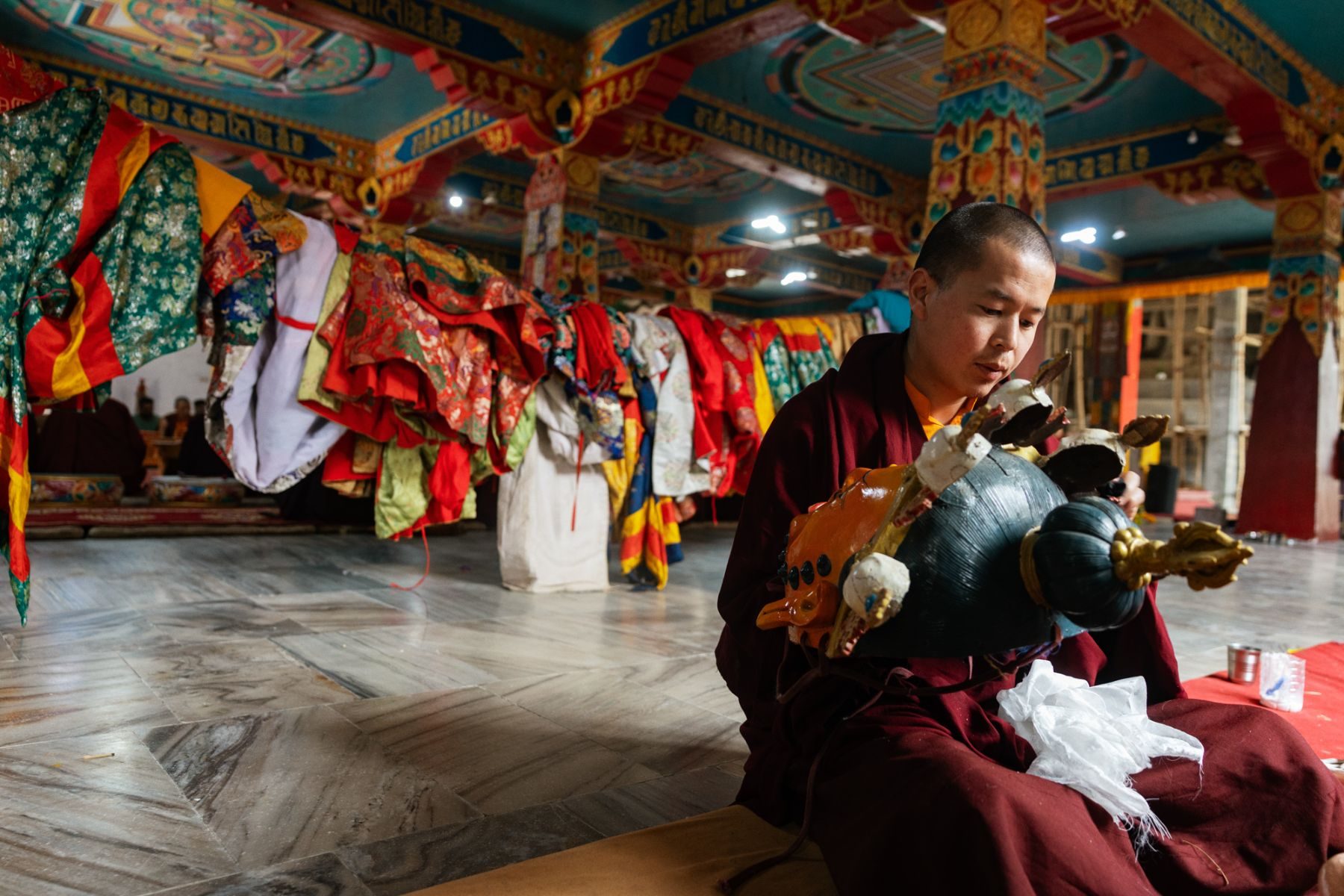
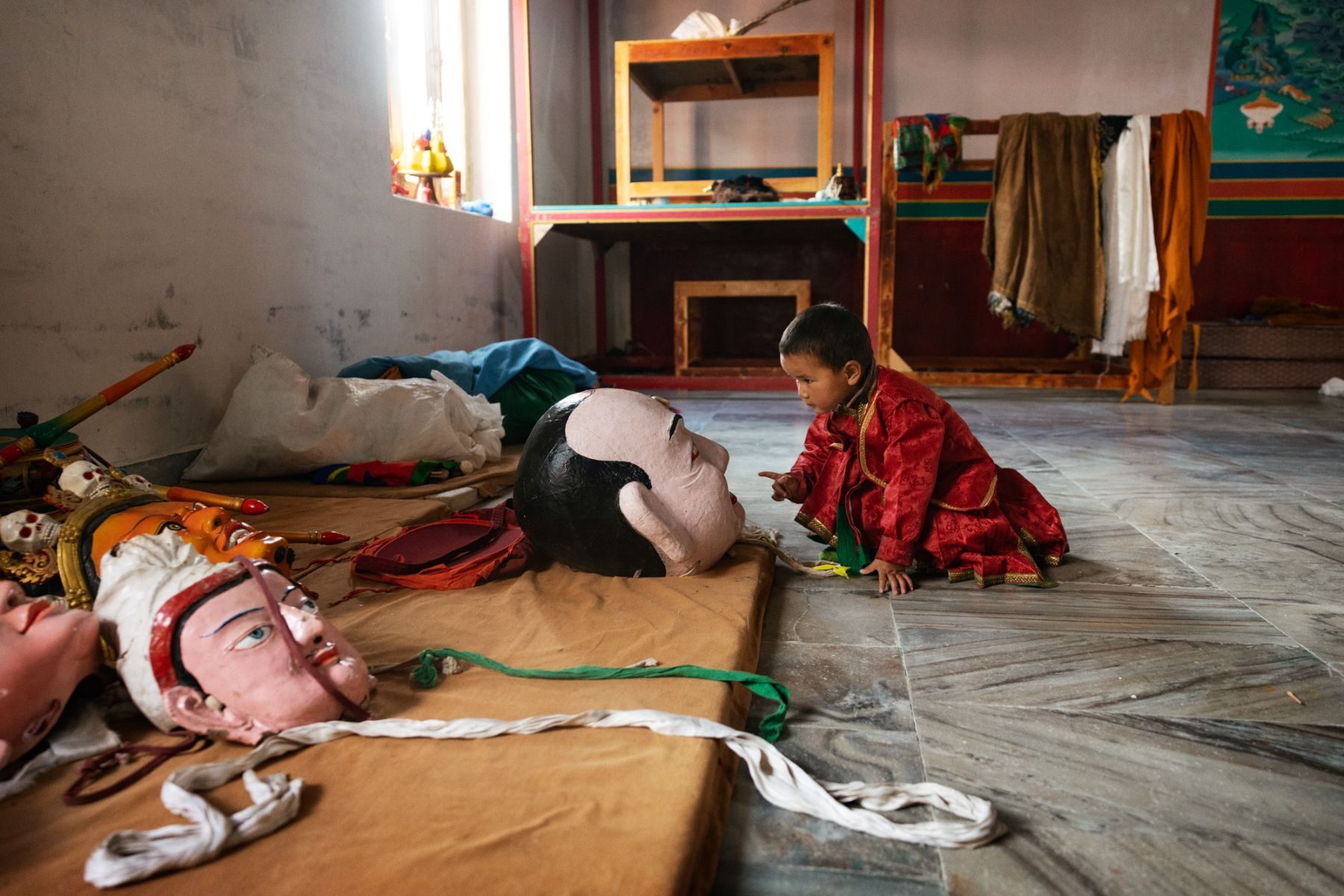
In the half-light, prayers and the deep notes of the horns echoed off the walls. In a corner, the young monks were putting the finishing touches to the masks and headdresses, adjusting a ribbon, checking a painted eye, with a care that felt almost tender. I could have stayed there for hours.
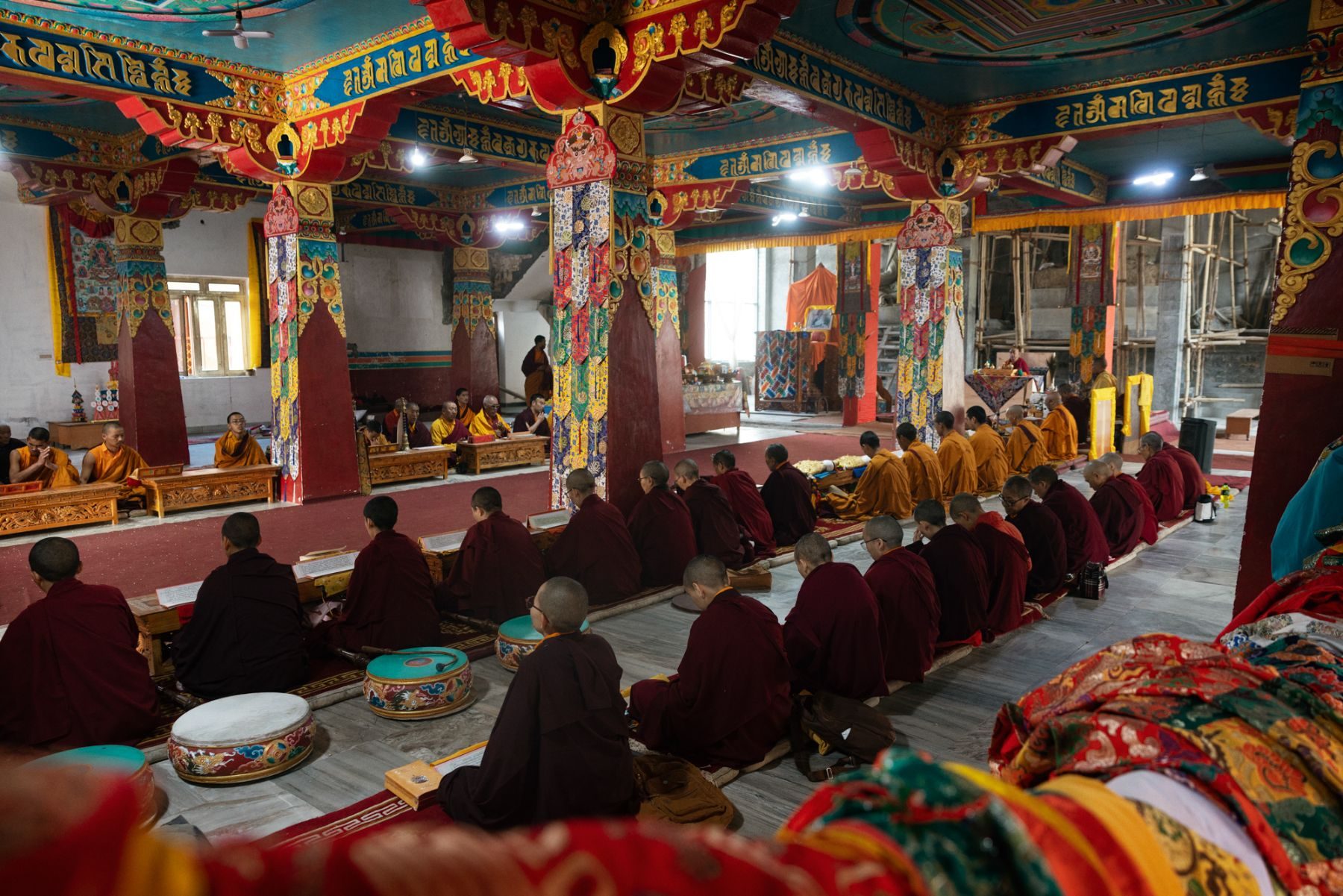
Inside the main temple, on the morning of the festival - Thomas Cytrynowicz ©
Each of these masks embodies a protector of the Dharma or a cosmic force. Wearing one is a ritual in itself: the monk fades away to make room for the deity. Their purpose is to frighten and destroy the negative forces accumulated in the valley over the past year. Ego, ignorance, jealousy.
Little by little, the villagers arrived. On the raised throne at the centre of the temple sat the Khenpo, the abbot of the monastery. One by one, people queued to bow before him and receive the Tshe-wang, a blessing for a long life. He touched their heads with a sacred object, or tied a thin thread of red or yellow silk around their necks, carrying the protective energy of the deities invoked that very morning.
When I stepped back outside, the courtyard had filled up.
Before taking a single picture, I took the time to look around. Where would the monks come out? Where would the light fall? Where would the crowd gather? When I photograph, I am first and foremost an observer. I watch, I analyse what is happening around me, and only then do I decide where to stand.
So I chose my spot, settled in, and waited.
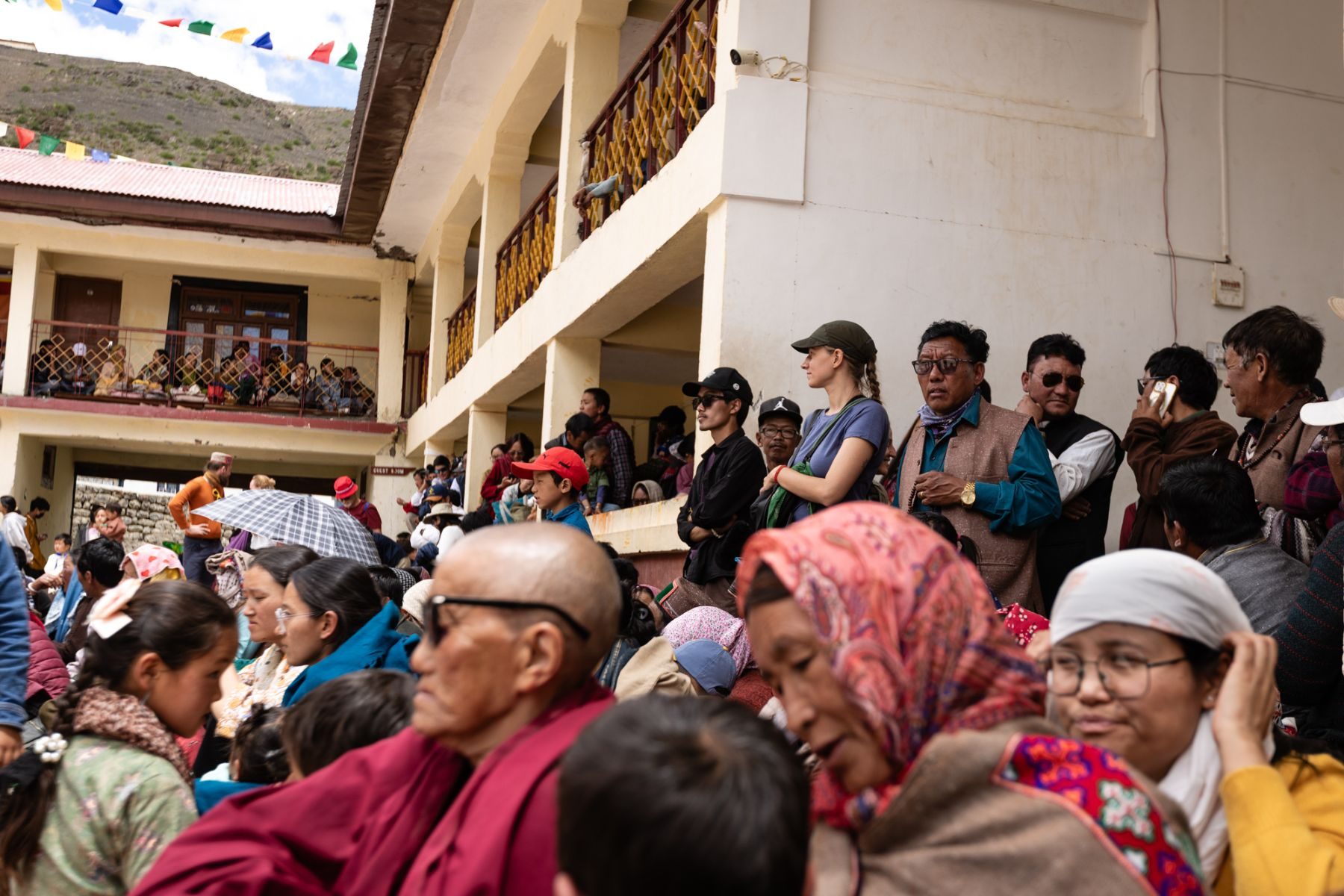
The crowd gathers around the courtyard of Kungri monastery - Thomas Cytrynowicz ©
Then the dungchen sounded, the immense copper horns. Their low notes are said to resonate into the ground, waking the deities of the earth and purifying the soil. Drums and cymbals followed, setting the rhythm of the battle to come.
The monks first paraded in the black hats of the Shanag, a symbol of the final triumph of Buddhism over persecution. Then they returned in fringed yellow headdresses. Each time they lifted a leg and brought it down heavily, they crushed the negative forces beneath their feet.
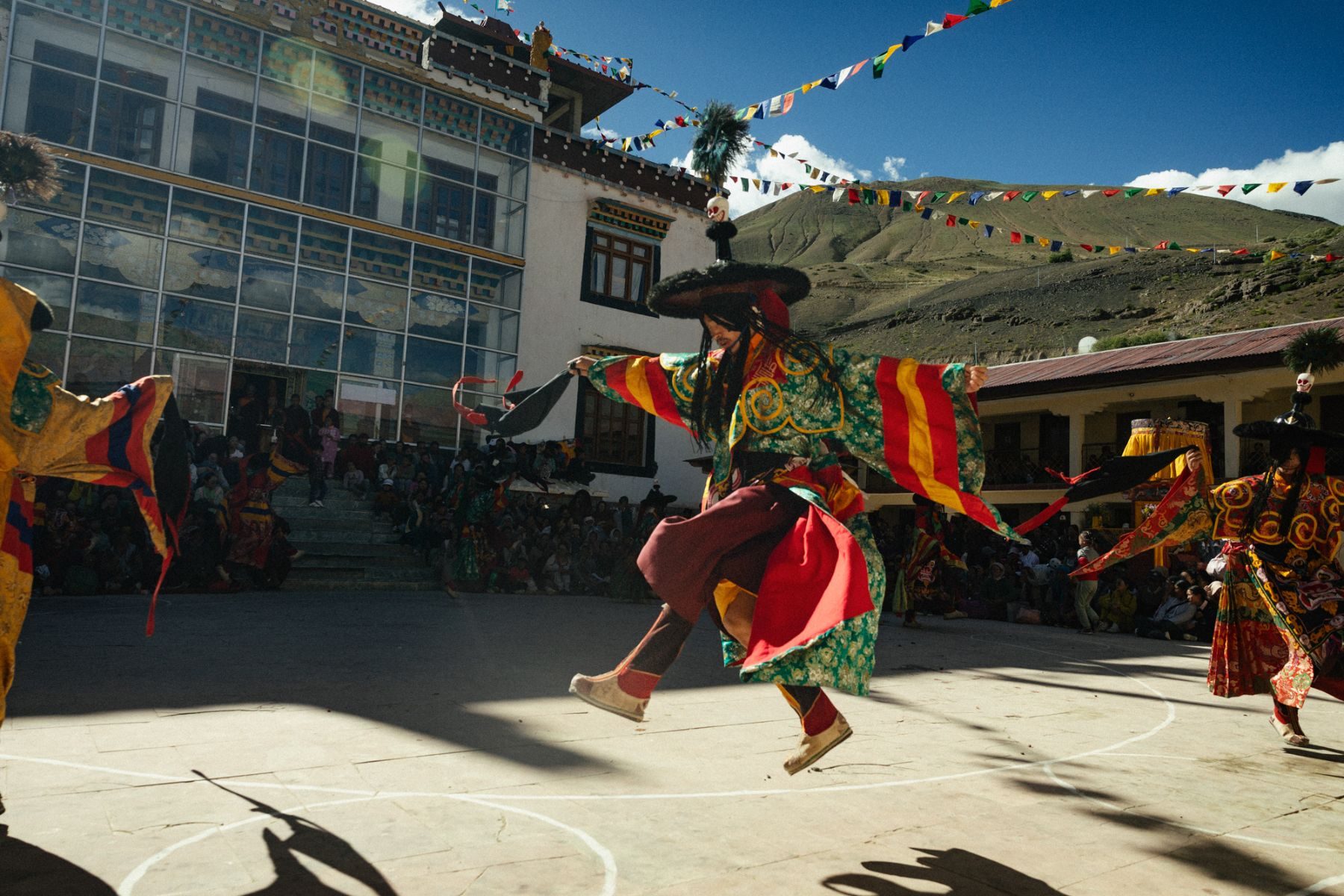
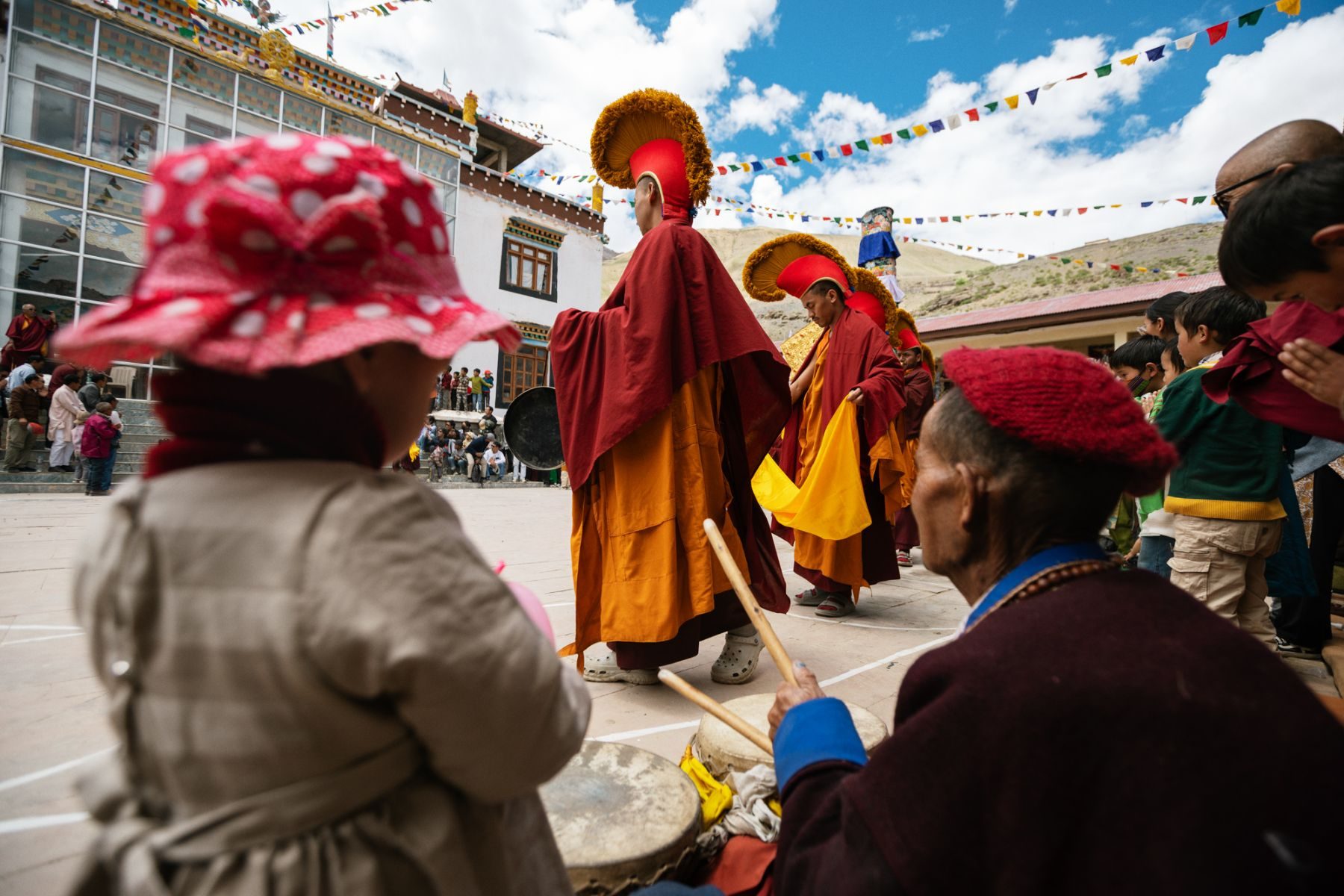
For the monks of Kungri, this is not a performance. It is a meditation in movement, codified down to the smallest gesture.
The crowd lined up once again, this time before the monk embodying Guru Rinpoche, surrounded by his eight manifestations, to receive the direct blessing of the deities.
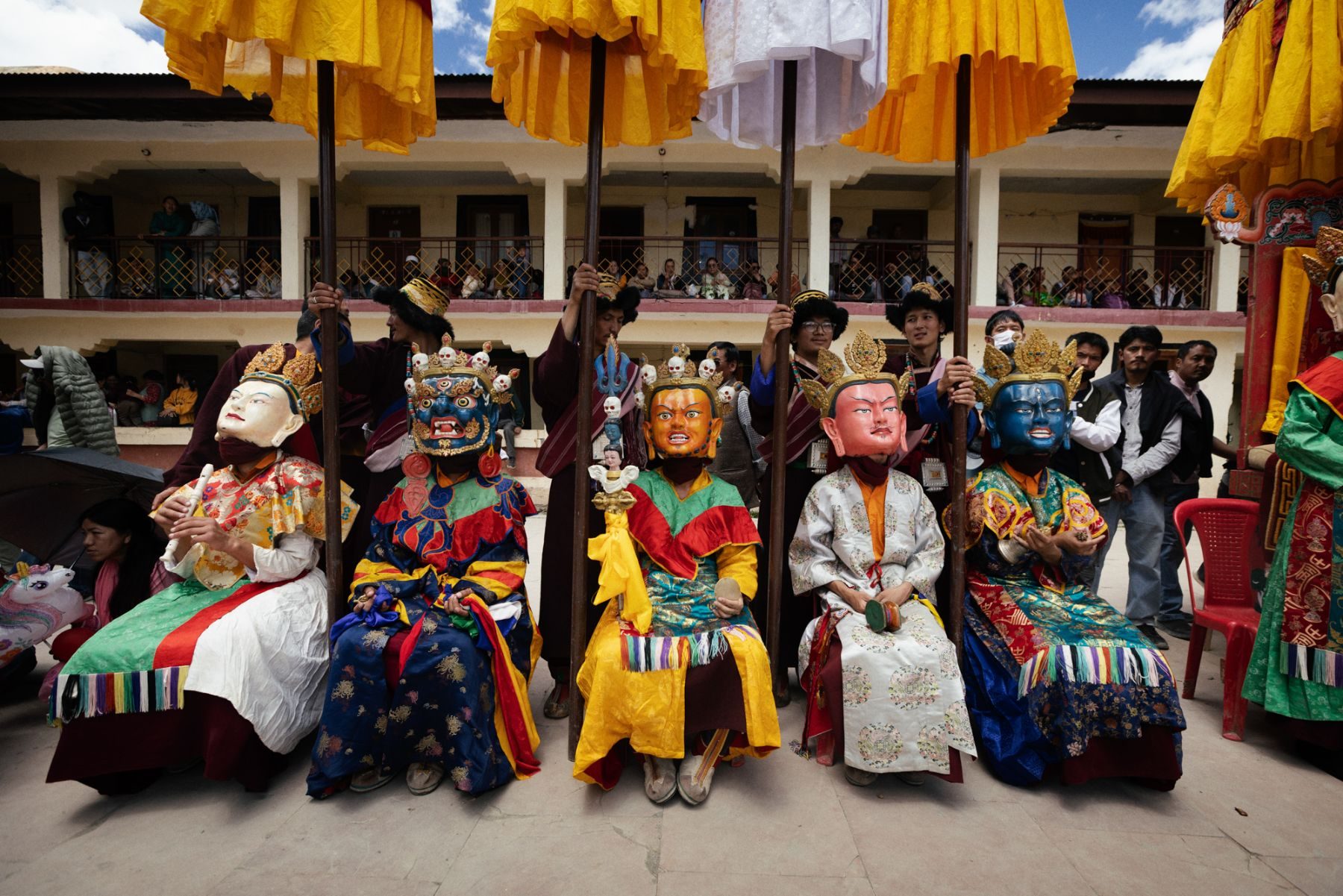
Guru Rinpoche and his eight manifestations - Thomas Cytrynowicz ©
Next came the Buchen, lay lamas from the Pin Valley. This local brotherhood of itinerant performers is famous for its theatrical exorcism rituals, a tradition found nowhere else.
In the most striking act of the day, they pressed the full weight of their bodies onto sharp blades without a single cut. For those watching, it is the proof of spiritual mastery reached through intense tantric meditation.
Dancing with death
But what stayed with me most came at the very end, with the Chitipati.
Two skeletons, masked and dressed in white, dancing together in the courtyard. In Tibetan Buddhism, they are the lords of the charnel grounds, guardians of wisdom. Their dance is a reminder that nothing lasts, and that death is not something to hide from.
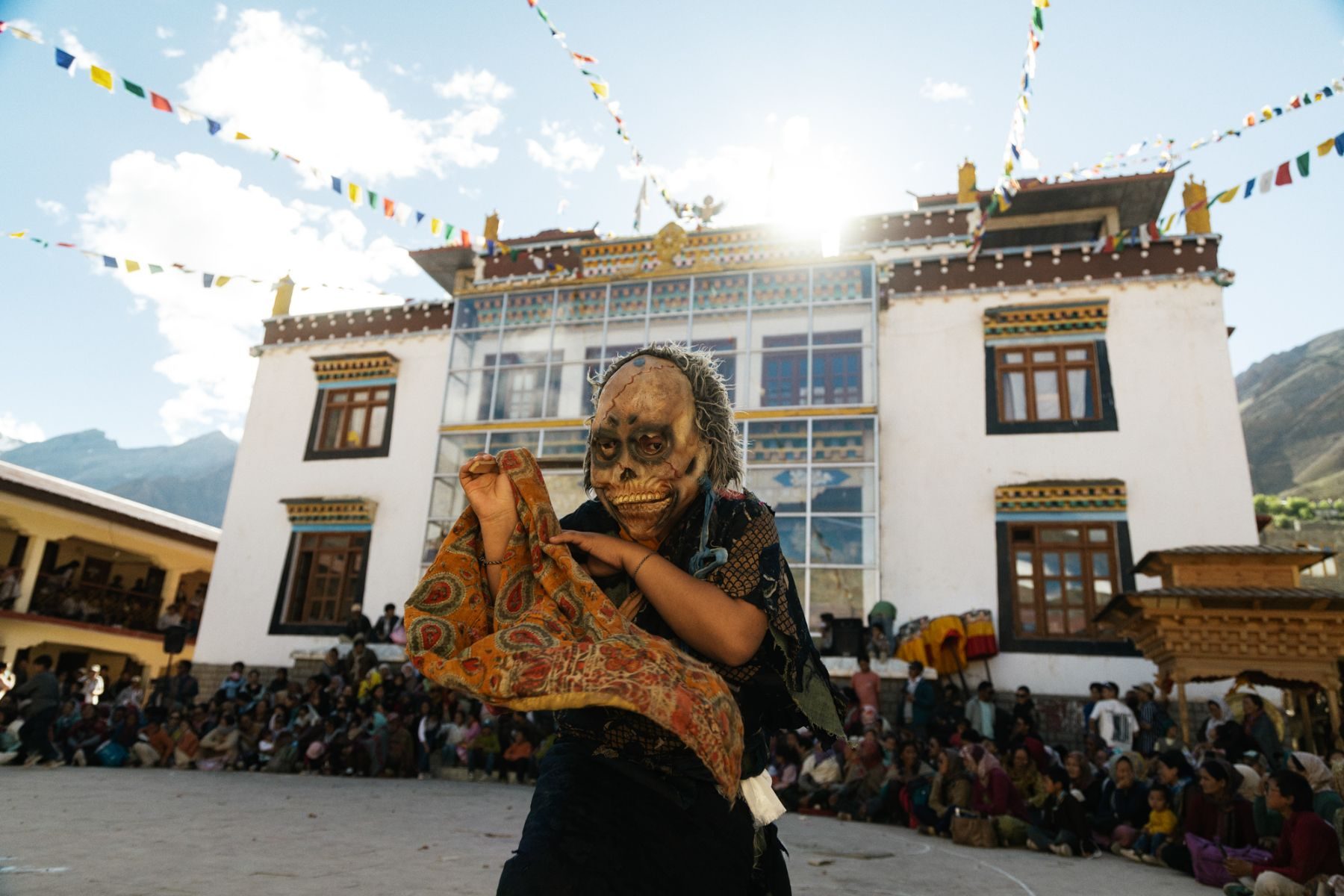
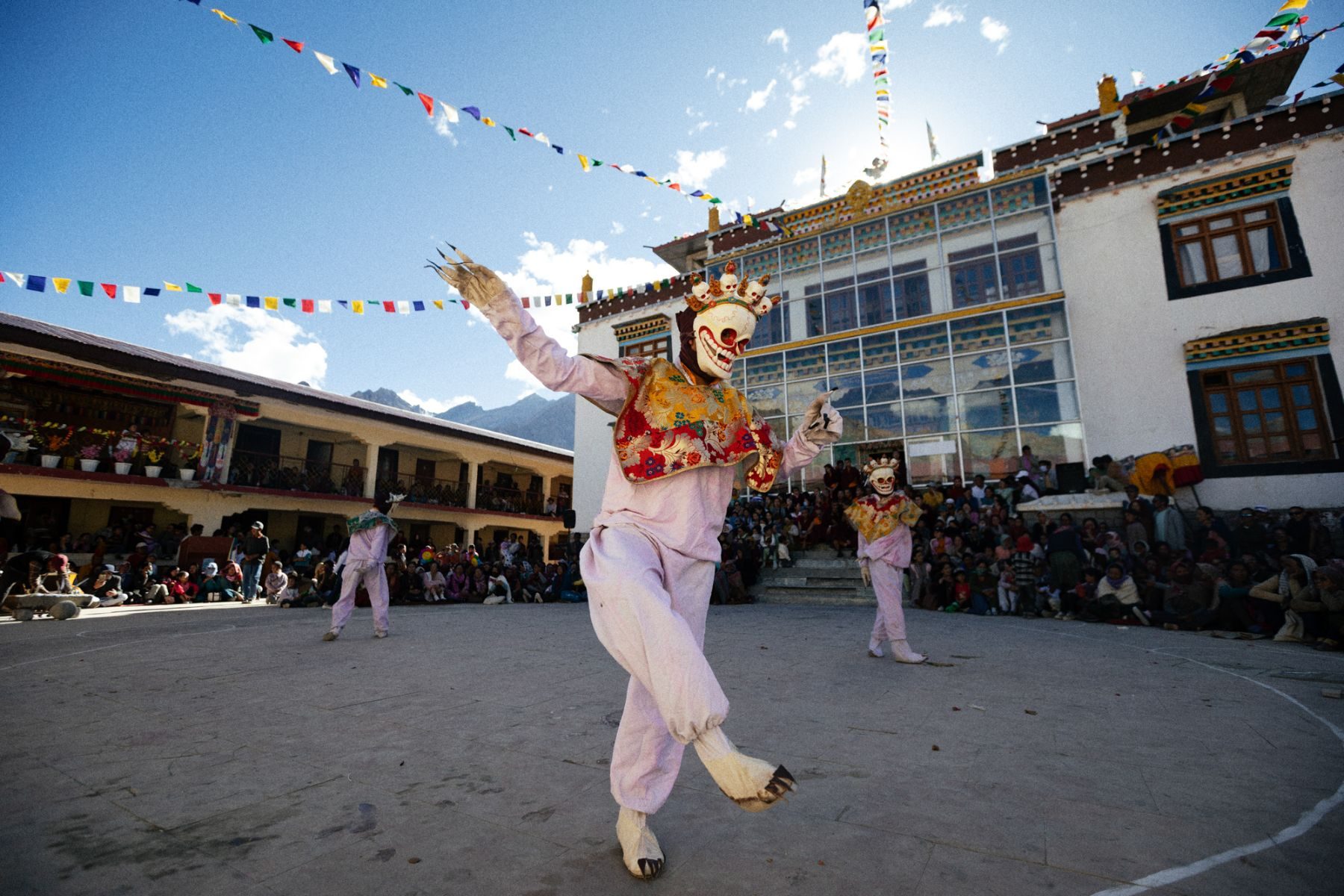
That is what moved me so much. Here, death is not a taboo, nor an end. It is part of the cycle, a passage, something you look at in broad daylight, in the middle of a celebration, surrounded by children and families. Far from inspiring fear, the Chitipati seal the purification of the place, placing the monastery and the whole valley under the protection of the deities for the year to come.
I left Kungri that evening with this image in mind: two skeletons dancing under the Himalayan sky, and a crowd watching them without fear.
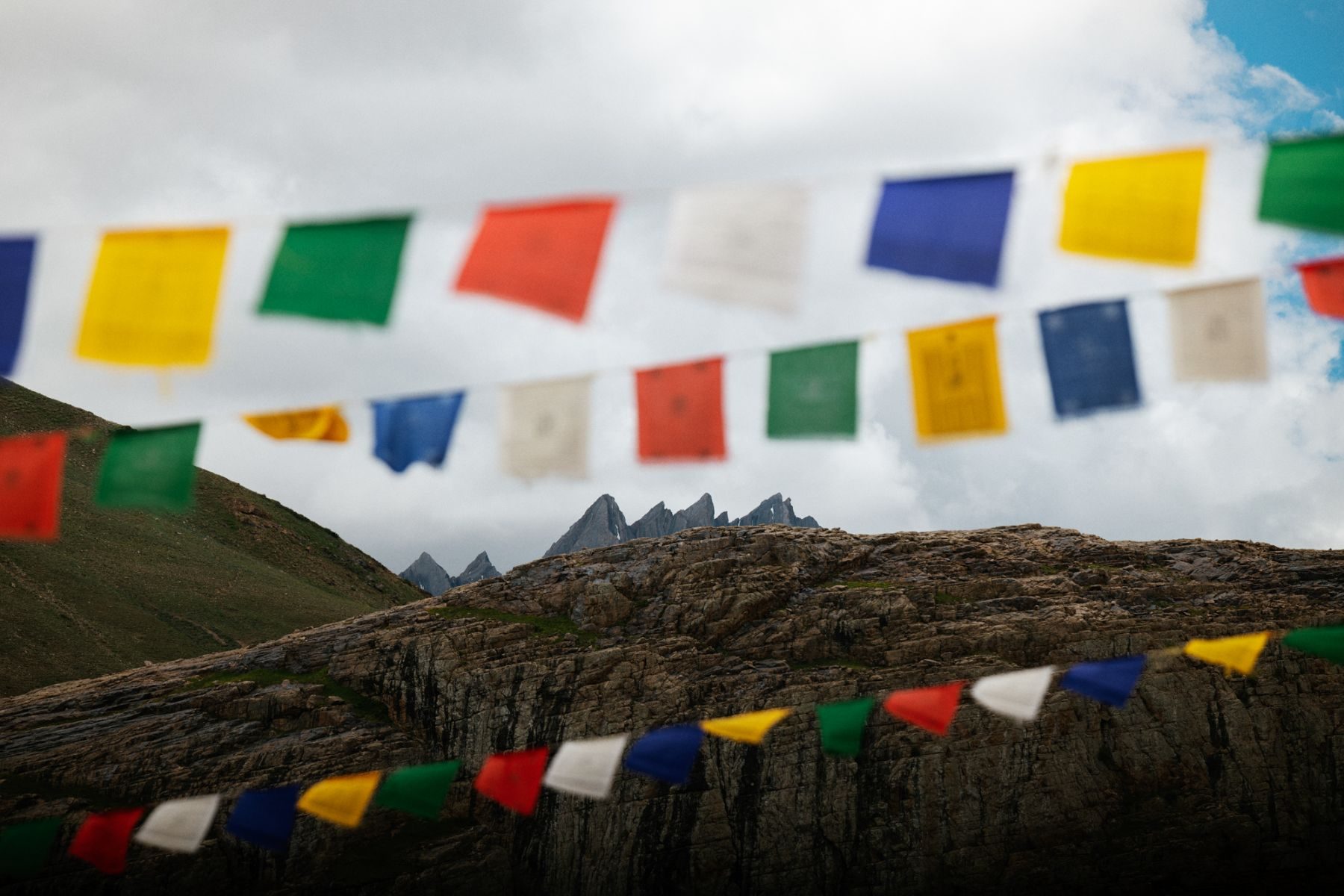
Prayer flags over the Pin Valley - Thomas Cytrynowicz ©